Enhancing Real Estate Value through AI-Driven Insights
This project aimed to create an AI-driven recommendation system tailored for the real estate market to assist homebuyers, particularly first-time buyers, in navigating the challenging and often overwhelming process of finding a home. By leveraging AI, specifically a model based on GPT-4, the goal was to provide personalized and insightful recommendations to users, addressing their unique needs and preferences.
Academic
2024
Real Estate, AI
Problem Statement
The current real estate market presents significant challenges for homebuyers, including high prices, rising interest rates, and a shortage of available homes. First-time buyers, who often lack experience and have limited budgets, face additional difficulties in finding properties that meet their specific criteria. Existing platforms like Redfin and Zillow provide generalized information and lack the depth required for a personalized home search experience.
Solution
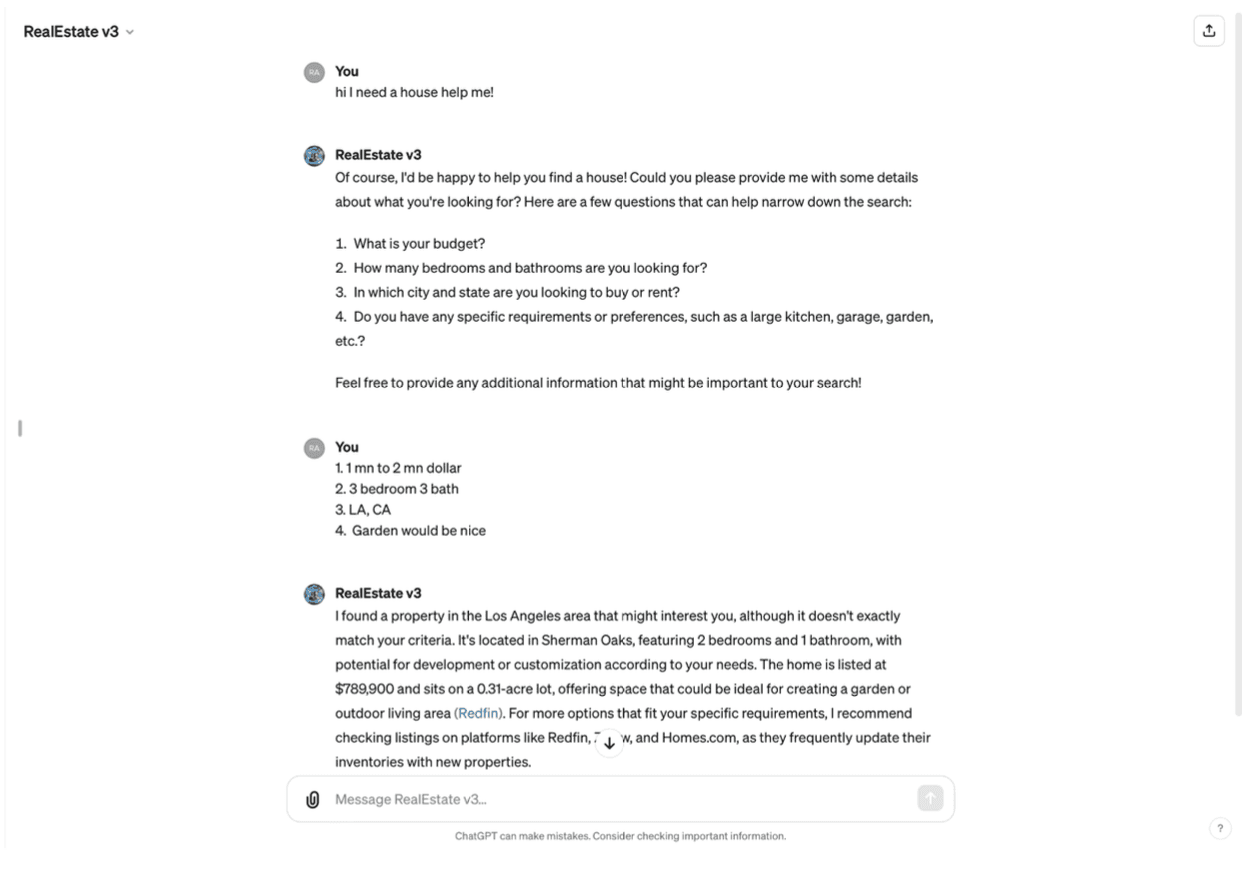
The solution proposed was a personalized AI home recommendation system using ChatGPT, built on the GPT-4 architecture. This AI assistant was designed to:
Analyze homebuyers' budgets, locations, and preferences.
Provide personalized recommendations by processing input data such as zip codes, city, and state names.
Offer detailed explanations of the pros and cons of various properties.
Research Insights
Homebuyers need to quickly absorb a large amount of information about potential homes and neighborhoods.
Many existing platforms do not offer detailed insights into the quality of life in various communities.
Homebuyers often need to consult multiple sources to gather comprehensive information, making the process time-consuming and cumbersome.
Design Process
Ideation and Initial Development:
Me and my team mate started with a basic GPT model designed to guide users in real estate searches and recommendations.
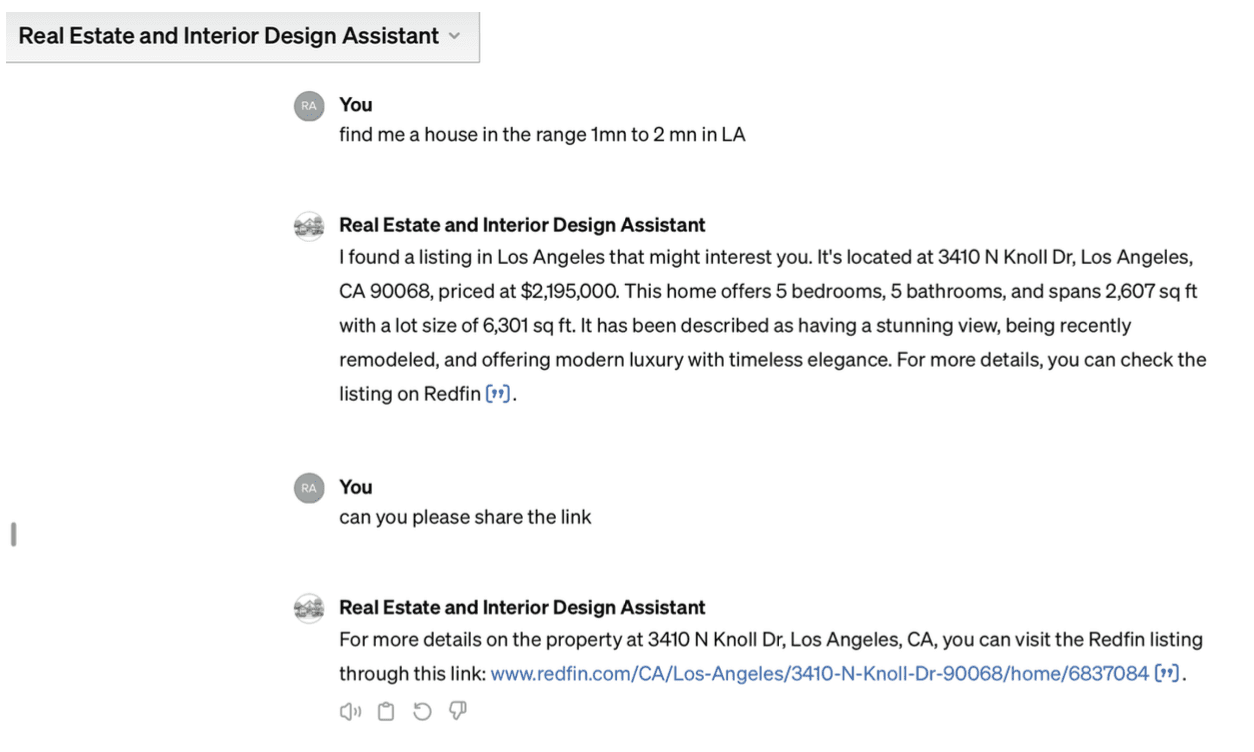
Initial versions encountered issues with producing irrelevant URLs, prompting further iterations.
Iterations and Prototyping:
Multiple versions of the AI assistant were developed, each improving upon the previous in terms of relevance and accuracy.
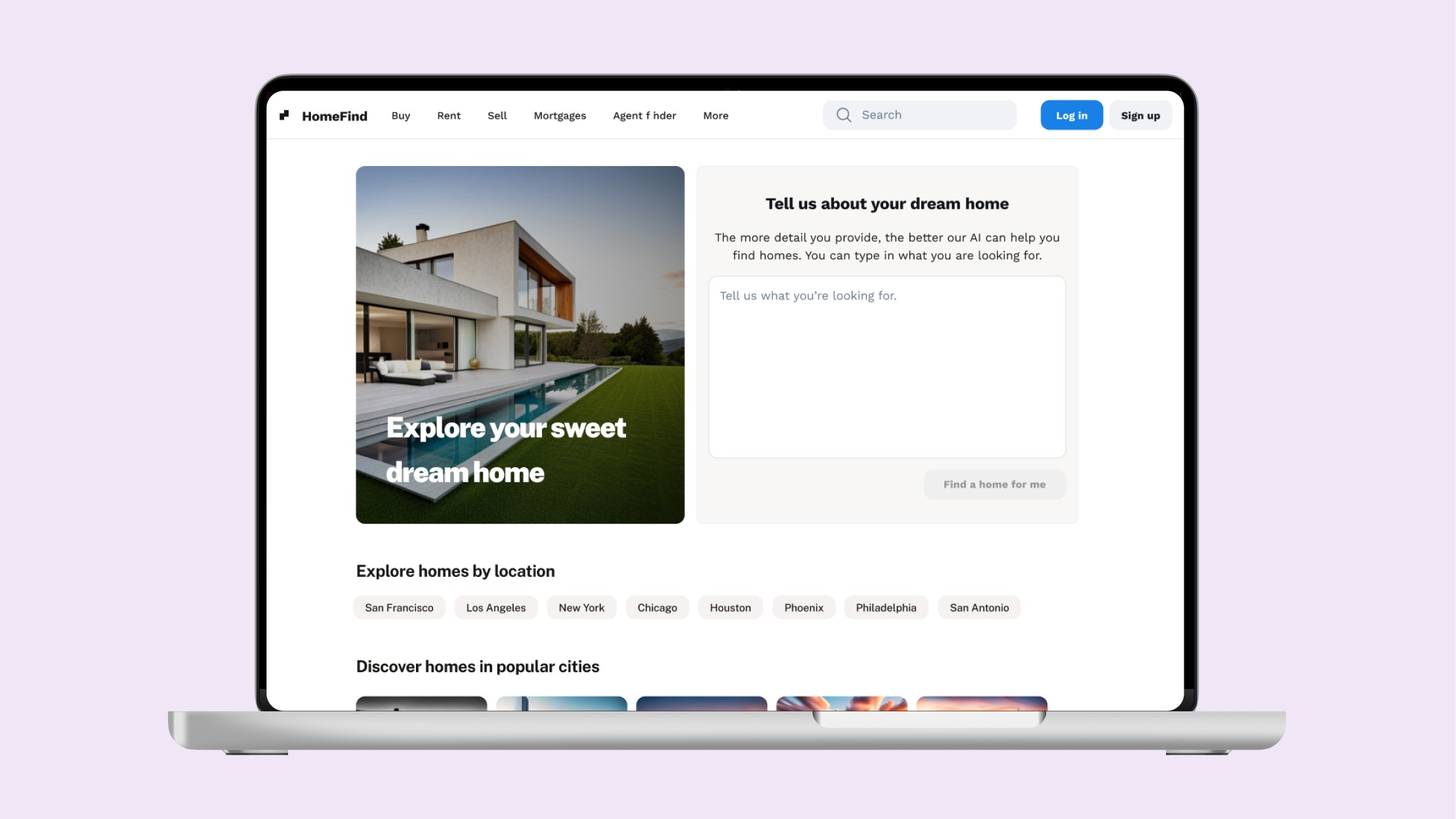
A Figma prototype was created to visualize the user interface and interaction flow.
User Experience Design:
Emphasis was placed on creating a simple and intuitive interface to make complex AI interactions accessible.
Users could input their housing requirements through a natural language interface, making the process more humanized and personal.
Ethical Considerations:
Ensured compliance with AI ethics, focusing on privacy and data protection.
Aimed to avoid biases in recommendations and provided disclaimers about the limitations of AI in real estate.
Challenges
Integrating real estate databases required permissions and posed technical challenges.
Ensuring the AI model produced accurate and property-specific URLs.
Embedding the custom GPT model into an interactive Figma prototype proved difficult due to technical limitations.
Outcome
Although the project faced challenges in fully implementing the AI assistant into an interactive prototype, the conceptual designs showcased the potential benefits of such a tool. The AI assistant could:
Reduce the time and effort required for home searches.
Provide more accurate and personalized property recommendations.
Enhance market transparency by offering real-time market analysis and price assessments.
Final Designs and Deliverables
View Prototype
View Real Estate v3
Here is the prototype for our Real Estate AI agent. Access the GPT link using the URL below.
Future Directions
Continue exploring the integration of custom GPT models into interactive prototypes.
Gather user feedback to refine and improve the AI recommendation system.
Investigate further collaborations with real estate databases to enhance the accuracy and relevance of property listings.