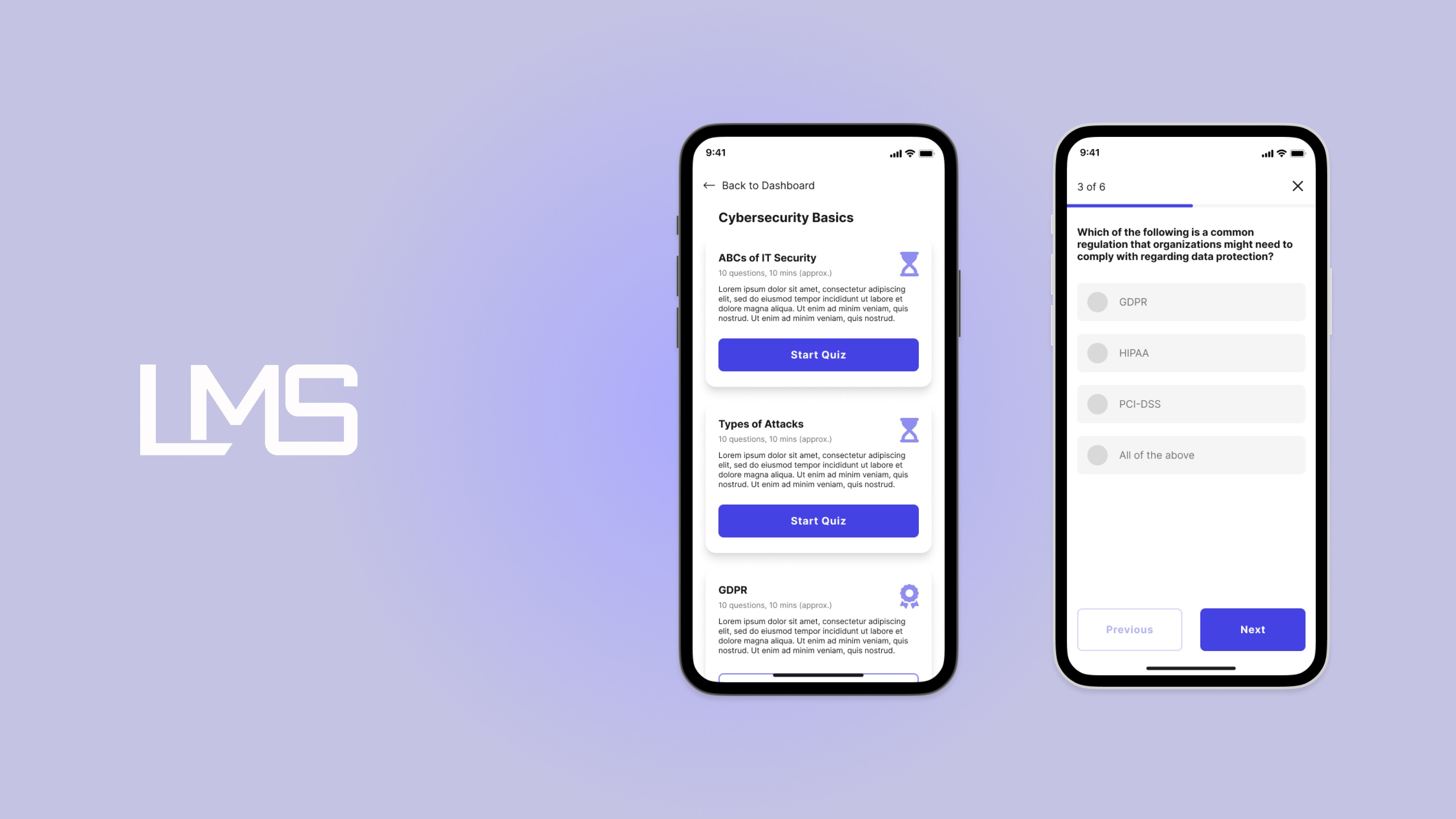
Learning Management System (LMS) Quiz Learning Platform
Deploying an MVP for a global learning platform used by over 30,000 employees.
Experience / Product Designer
Collaborated with 20 residents across product strategy, design, and engineering
Industry
E-learning
10,000+
Background
The LMS Quiz Platform project was part of the Method Residency Program, a high-paced internship experience designed to simulate real-world challenges in UX design, product strategy, and engineering.
As an Experience/Product Designer, I collaborated with 20 residents to design and deploy a minimum viable product (MVP) for a global learning platform catering to over 30,000 employees. The focus was on creating an engaging, interactive platform that could be seamlessly integrated into employees’ daily routines.
Challenges
Cross-Functional Collaboration: The project required alignment across three scrum teams—design, product, and engineering—to ensure a cohesive user experience.
Design System Constraints: Adhering to the Boilerplate Design System while allowing for creative flexibility.
Time Sensitivity: The project spanned just eight weeks, necessitating swift execution of research, wireframing, prototyping, and development handoff.
Goals
The primary objective was to transform traditional learning experiences into interactive, engaging activities that encourage users to return and continue learning. Specifically:
Enhance Engagement and Retention: Make the platform "sticky" by integrating engaging, user-friendly elements.
Encourage Self-Motivated Learning: Design the LMS to allow users to navigate and personalize their learning paths.
Support Non-Intrusive Learning: Deliver bite-sized, gamified content that minimizes disruption during work hours.
Design Methodology
Foundational Research
Understand Users & Competitors
Identify Gaps
Gather Insights
Wireframing
Concept Development
Sketching
Low-fidelity
Synthesis & Ideation
Organize Findings
Generate Ideas
Mockups & Prototype
Design Interfaces
Design System
Iterations
Research and Insights Gathering
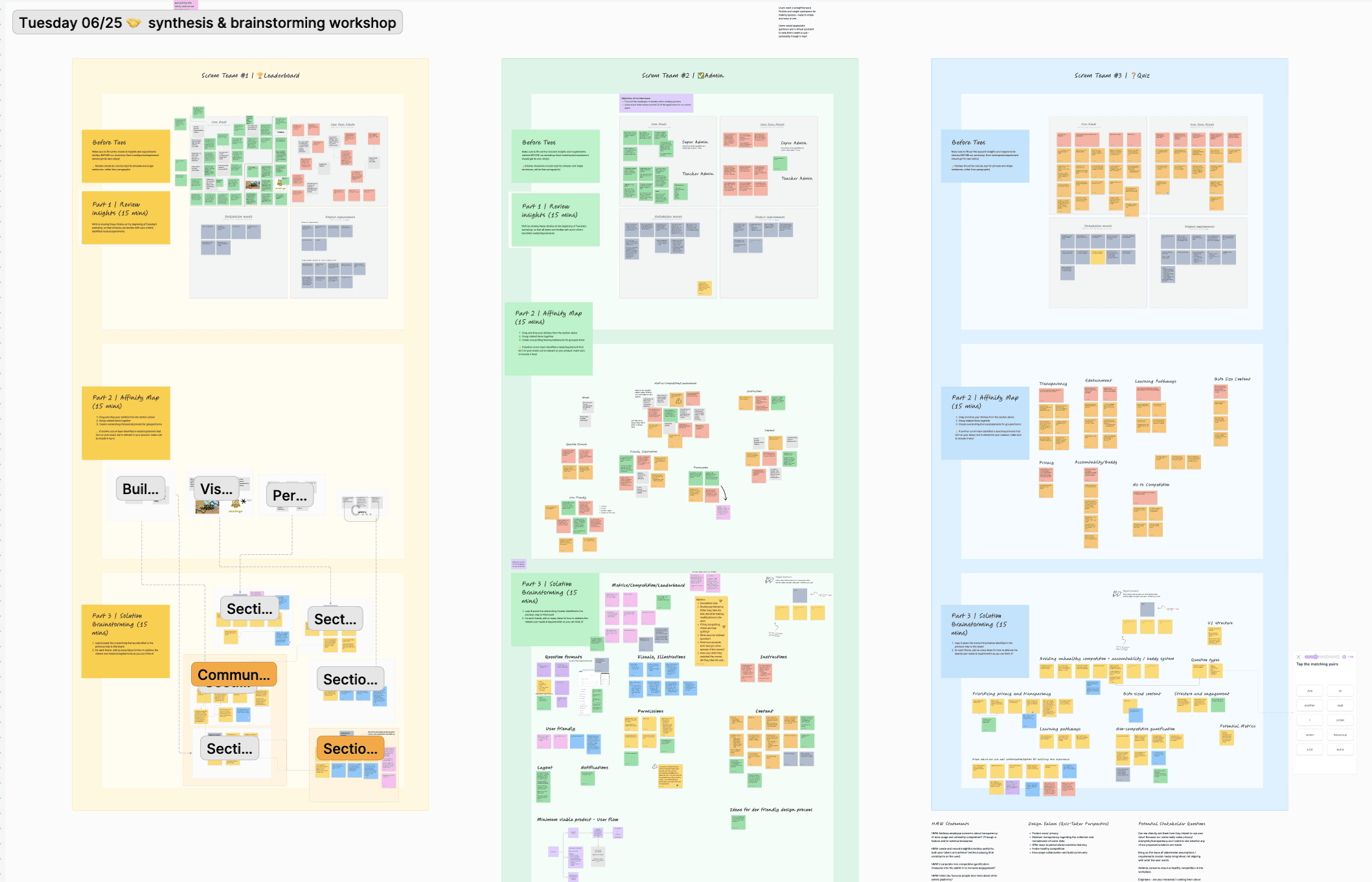
User Interviews and Affinity Mapping: We interviewed learners and administrators to understand their preferences and frustrations. Findings highlighted a desire for “edutainment,” emphasizing fun and interactive elements to break the monotony of traditional training.
Competitive Analysis: Studied popular platforms like Duolingo, Kahoot!, and LinkedIn Learning to identify successful engagement techniques such as instant feedback, gamification, and progress tracking.
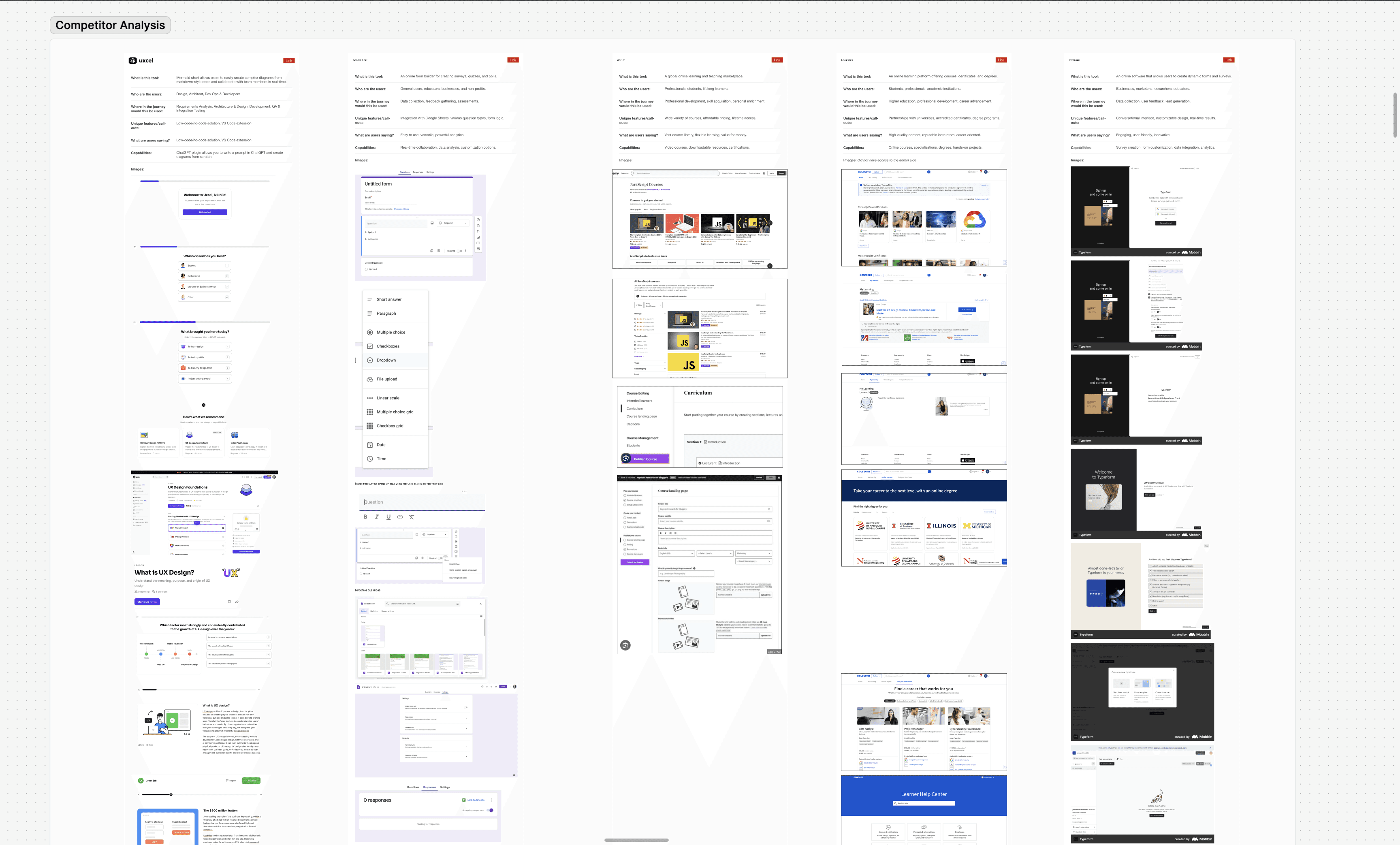
Competitive Analysis
Competitive Analysis
Synthesis and Ideation
We synthesized data from our research to address user needs with the following insights:
Gamification Beyond Leaderboards: We opted for badges, levels, and milestones that encourage progress without competitive pressure.
Customizable Learning Pathways: Users can preview or modify their learning paths and receive immediate feedback, fostering a personalized, learner-controlled experience.
Emphasis on Data Transparency: Clear messaging around data usage builds trust and reinforces user comfort with the platform.
Data Synthesis
Affinity Mapping
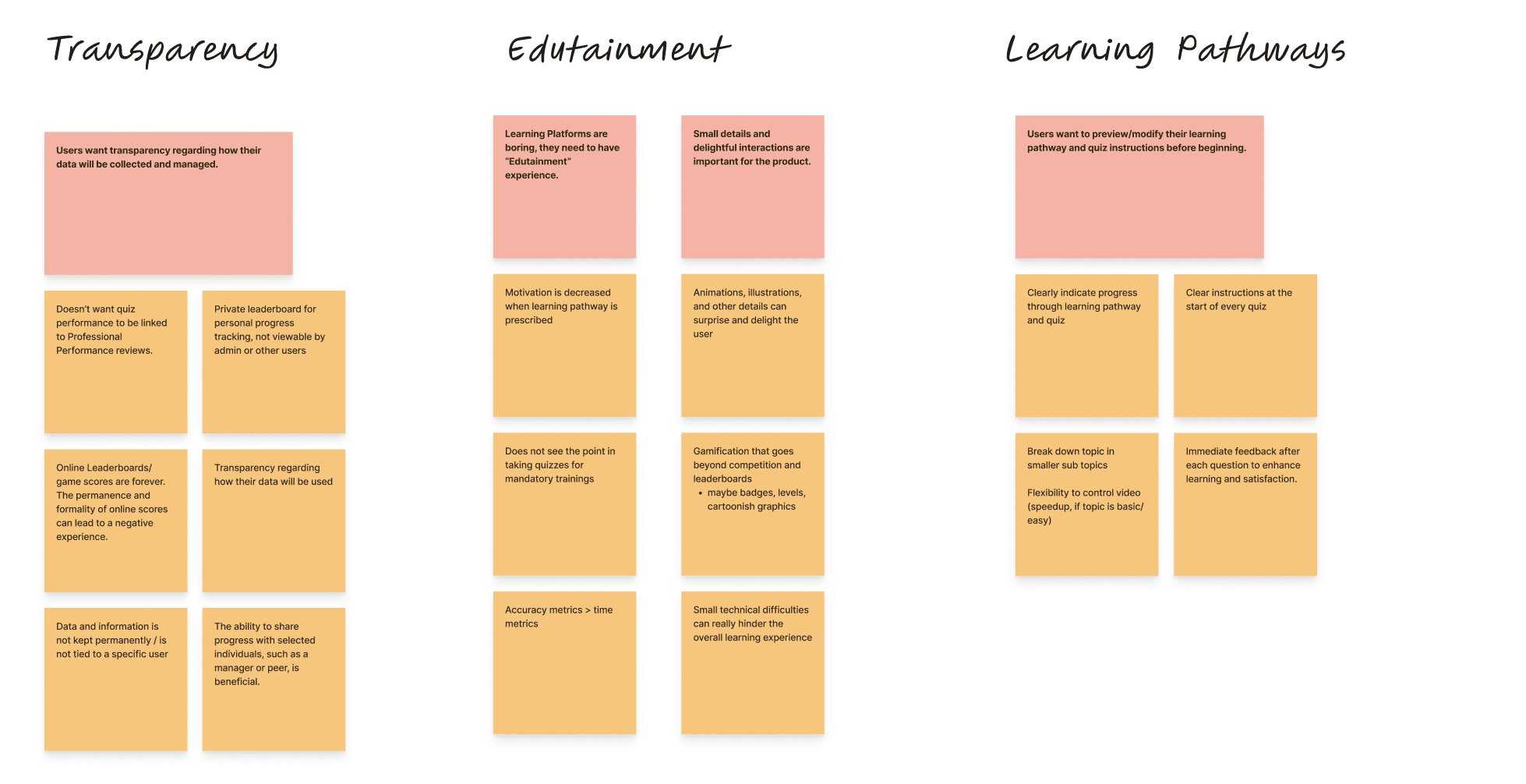
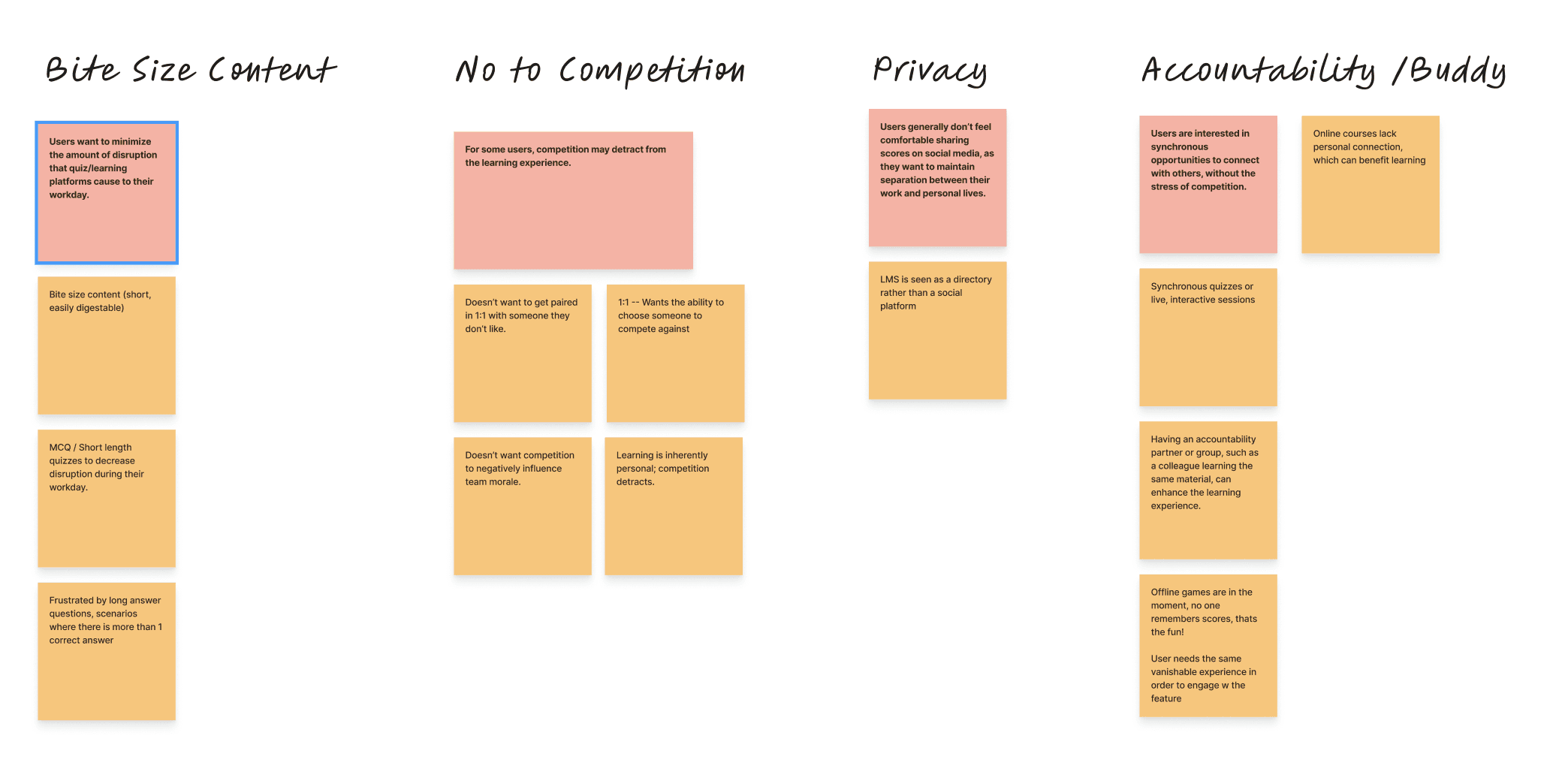
We synthesized data from our research to address user needs with the following insights:
Gamification Beyond Leaderboards: We opted for badges, levels, and milestones that encourage progress without competitive pressure.
Customizable Learning Pathways: Users can preview or modify their learning paths and receive immediate feedback, fostering a personalized, learner-controlled experience.
Emphasis on Data Transparency: Clear messaging around data usage builds trust and reinforces user comfort with the platform.
Prioritized MVP Features
Solution Brainstorming and Feature Prioritization
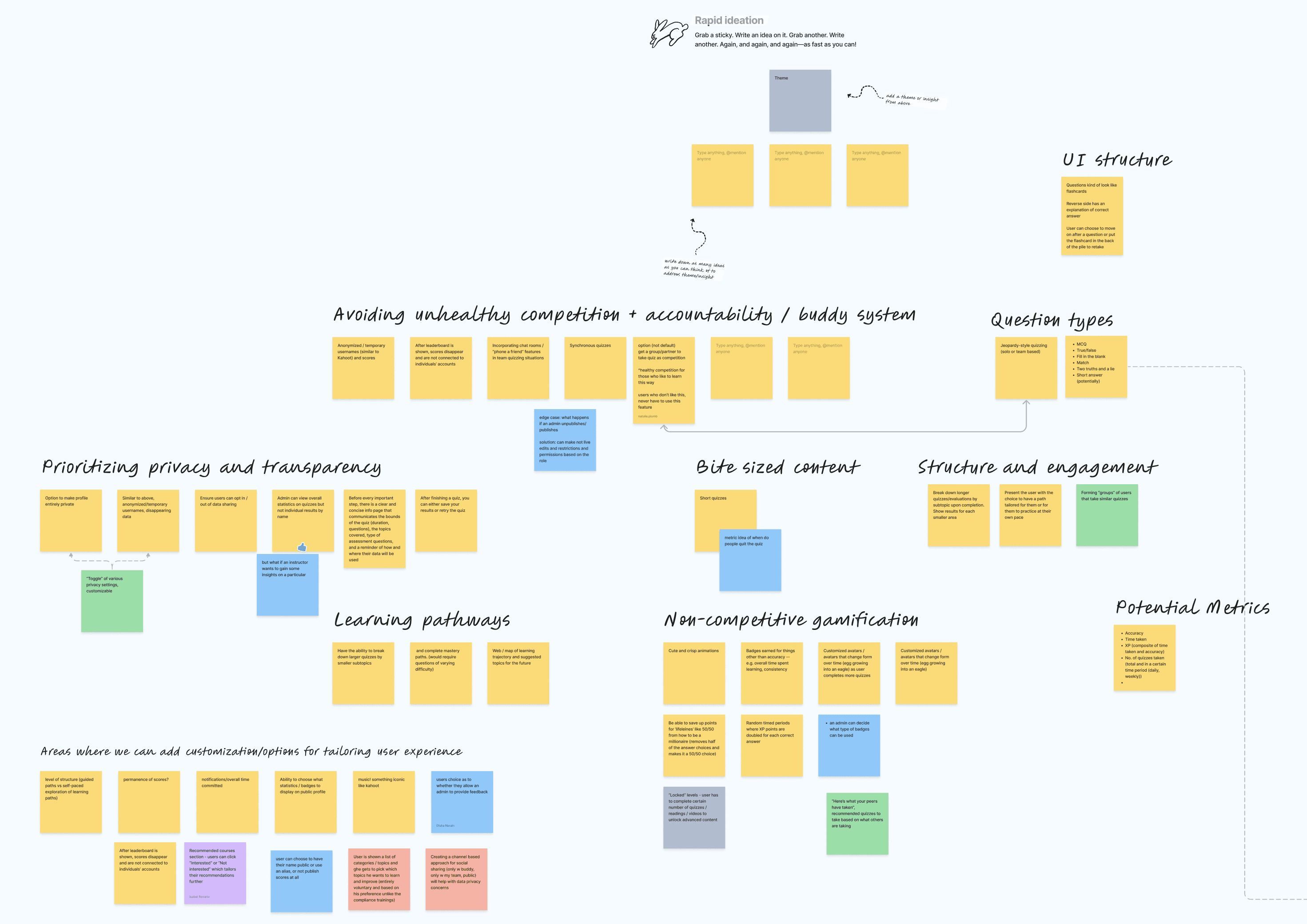
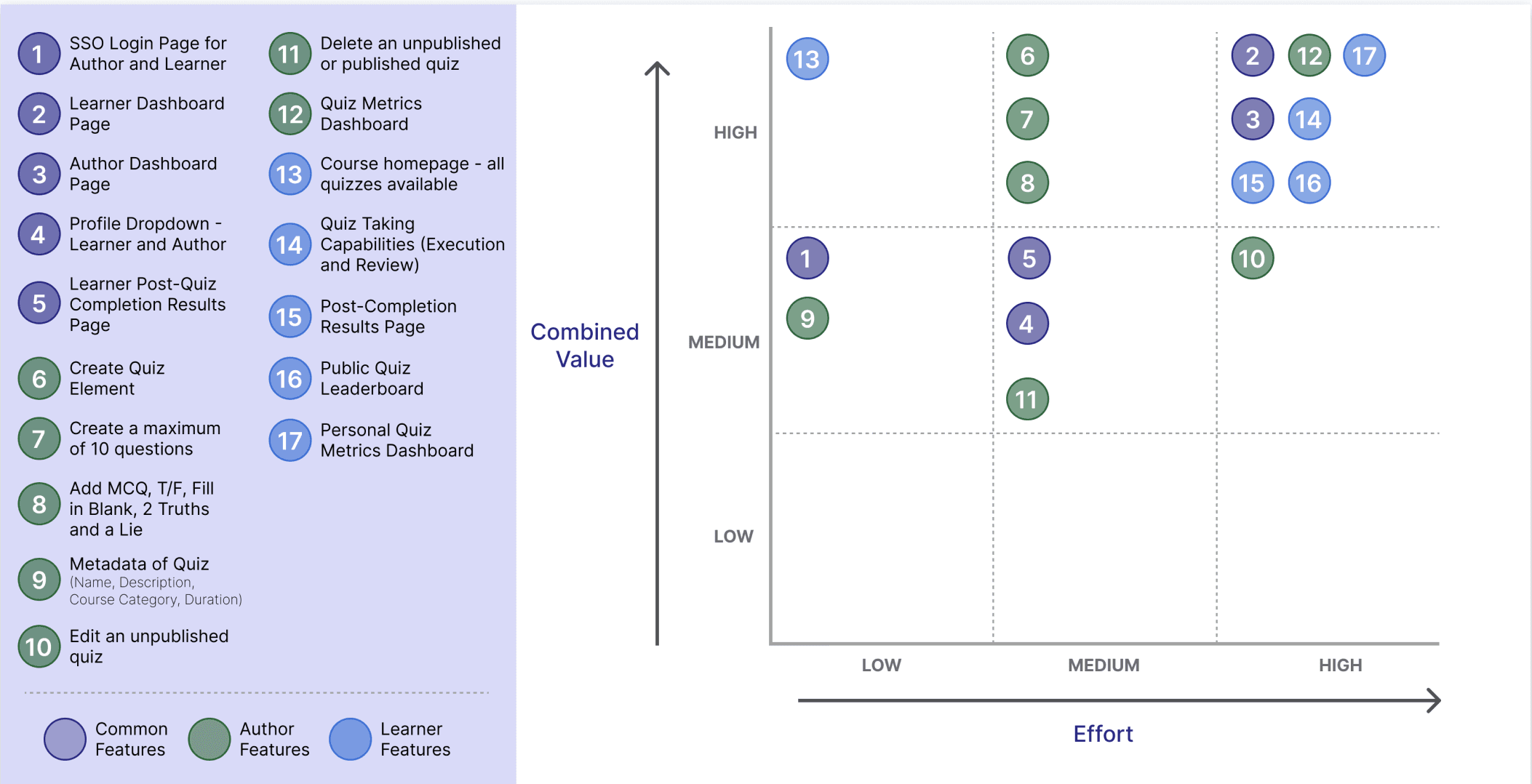
Our team prioritized features based on their impact, feasibility, and alignment with user needs:
Primary MVP Features:
Interactive quizzes with immediate feedback.
Private progress tracking with badges and levels for personal motivation.
Customizable content delivery that breaks learning into bite-sized sessions.
Prioritized MVP Features
Developed an information architecture that simplified navigation and clearly organized courses and quizzes. Initial low-fidelity wireframes were created to test user flows and ensure intuitive access to content.
Prioritized MVP Features
Information Architecture and Wireframing
Developed an information architecture that simplified navigation and clearly organized courses and quizzes. Initial low-fidelity wireframes were created to test user flows and ensure intuitive access to content.
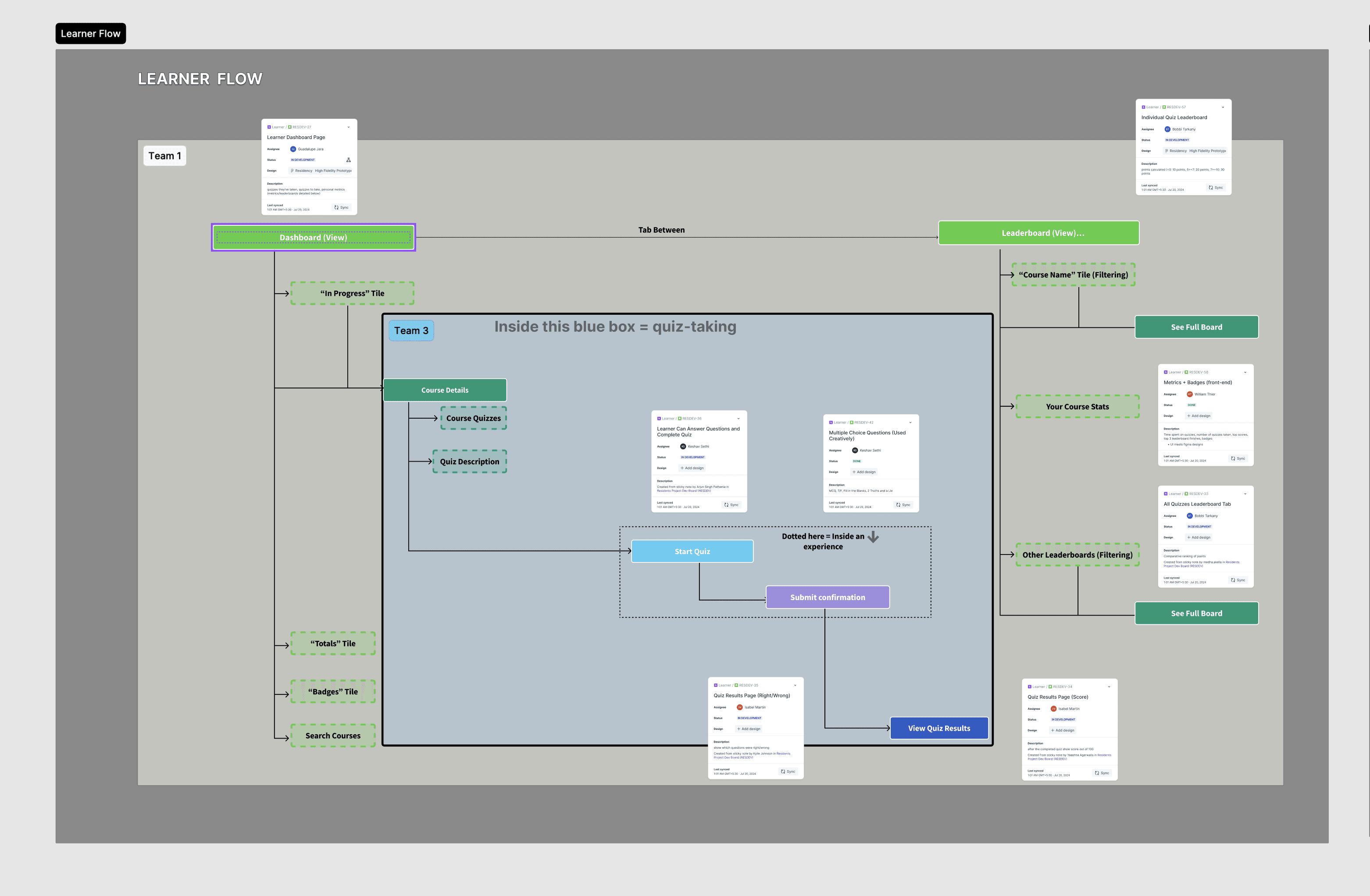
Table to compare competitors features'
Design Execution
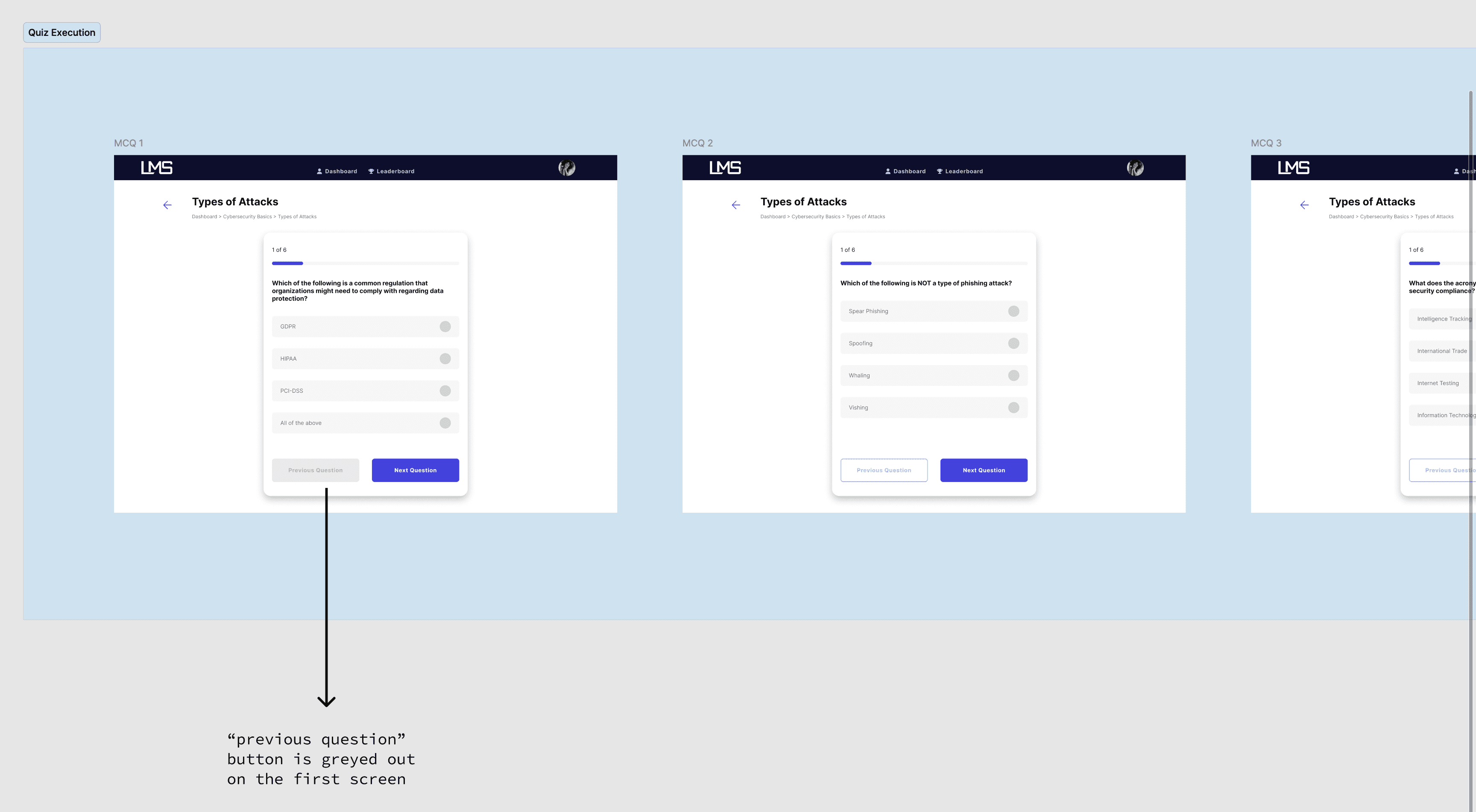
High-Fidelity Prototyping and Visual Design:
Color Palette and Branding: Consolidated colors and brand elements to maintain a cohesive look across various user interactions.
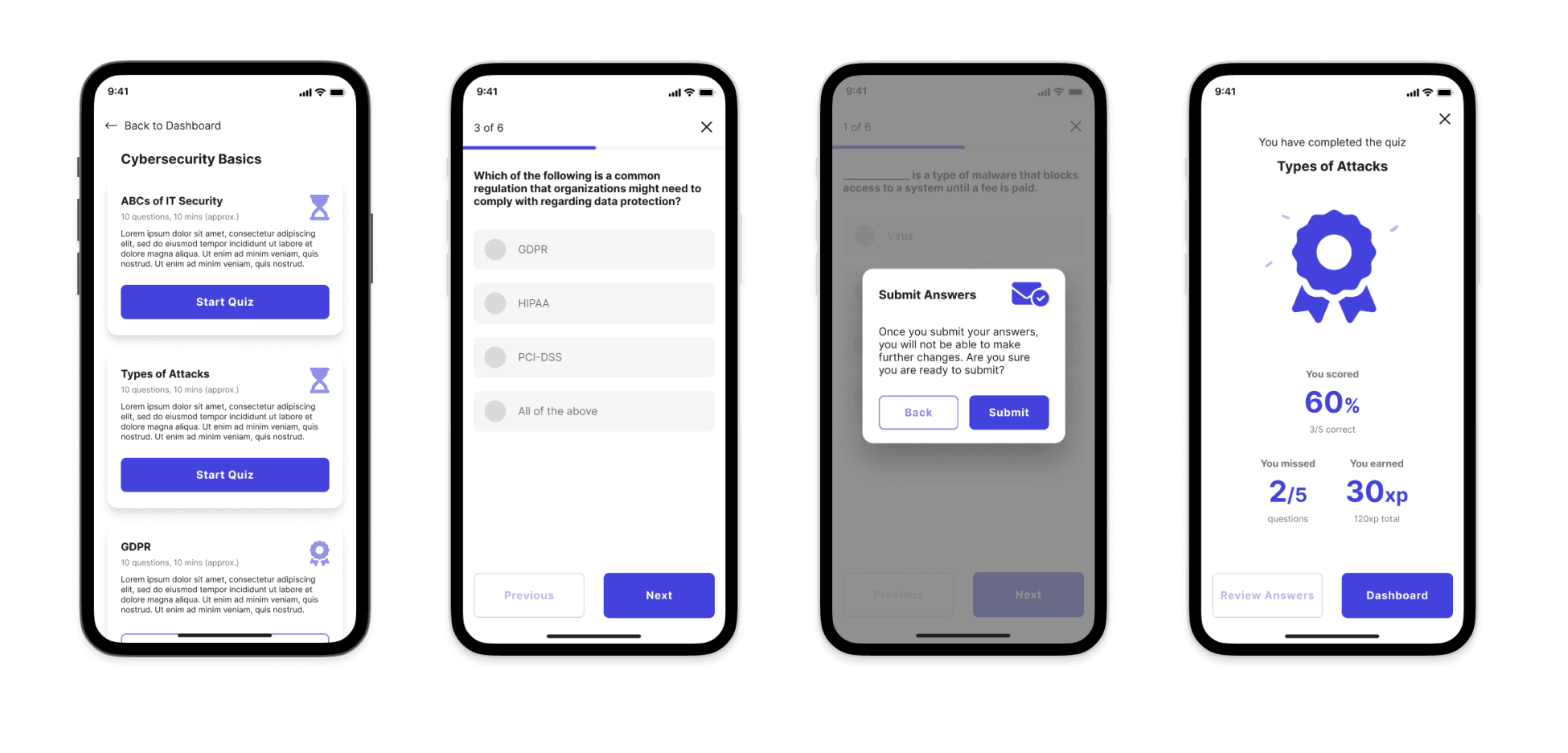
Interactive Components: Designed components such as personal leaderboards, quiz cards, and badges that conveyed progress and achievements without public competition.
Responsive Design: Adapted the interface for both desktop and mobile users, prioritizing essential features in mobile view for quick access.
Gamified Experience Highlights:
Badges and Levels: Awarded based on progress, allowing learners to celebrate achievements privately.
Engagement Prompts: Milestones with rewards for quiz completion times encouraged users to spend incremental time on the platform.
Information Architecture
Results and User Feedback
Engagement Boost: Initial feedback showed increased time spent on quizzes and course completion rates.
Positive Response to Personalization: Users appreciated the ability to control their learning paths and the inclusion of flexible video playback.
Privacy and Data Transparency: Clear messaging on data handling built trust, making users more comfortable with using the platform regularly.
Reflections and Learnings
Balancing Design and Engineering Constraints: Ensuring that designs remained implementable within time and technical constraints was a valuable exercise in practicality.
Responsive Design Iterations: Early attention to responsive design would have streamlined the process and improved user experiences on smaller screens.
Stakeholder Management: Frequent updates and clear communication with stakeholders ensured alignment and smooth project progression.
Post-MVP: Future Design Explorations
The MVP laid the groundwork for post-launch enhancements, including:
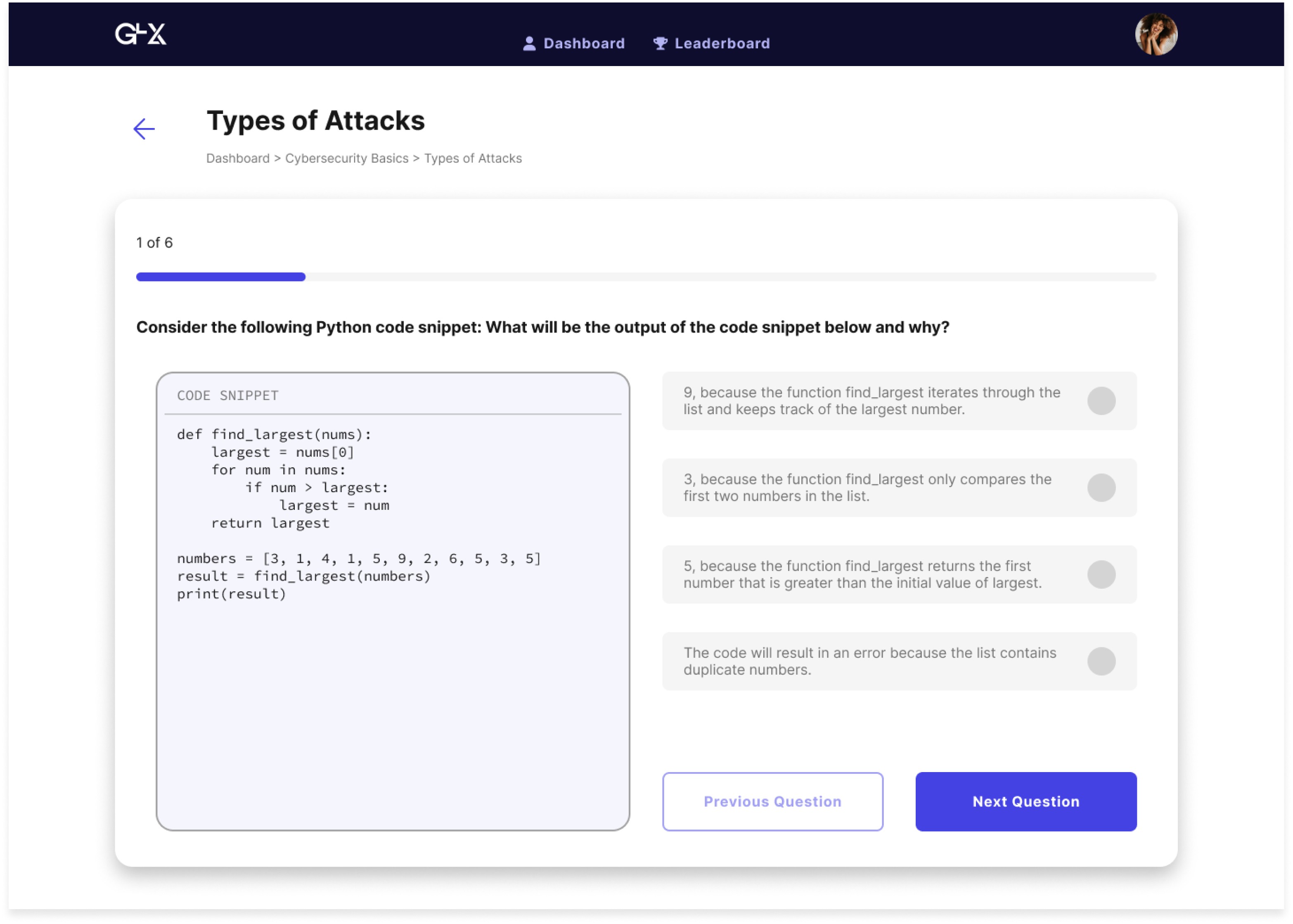
Interactive Coding Modules: Introducing code snippets in quizzes to improve practical, hands-on learning.
Mobile Experience Optimization: Refining mobile interactions for on-the-go learning and adapting features like gamification for smaller screens.