PharmEasy
PharmEasy is a consumer healthcare “super app”. It helps patients to connect with local pharmacy stores and diagnostic labs enabling them to order medicines, healthcare products and diagnostic tests.
Role
UX Researcher / UX Designer
Stakeholders
Design Team
Product and Business Team
PharmEasy Existing Users
New users
Health, Wellness & Fitness
Reimagining Healthcare
As a healthcare startup, we've faced the challenge of efficiently handling customer support calls within a reasonable timeframe. Despite our attempts to bolster manpower, addressing all customer queries promptly has proven challenging. To optimize user experience (UX), our focus has shifted towards comprehending the underlying reasons for these calls and devising strategies to minimize their occurrence.
Goals of the research
With the objective of gathering information and insights about users, their needs, and the context in which Pharmeasy is utilized, I opted to initiate the process with Discovery Research.
Access Target Audience
Get to the root cause of Customer Support calls
Research Methods
Crafting User-Centric Experiences: Selecting Optimal UX Research Methods for In-Depth Insights.
Addressing our primary concern of customer support calls, we initiated a survey to collect data from our customer support team. The aim was to pinpoint patterns and trends within the calls made by our customers.
Surveys
Why we did surveys?
Find out the user segment who is calling the most.
What primary language people talk in?
What's the gender of people calling?
Are the calls for order refills or other issues?
We send the survey to pharmacists, customer support team and other employees.
We received 69 responses.
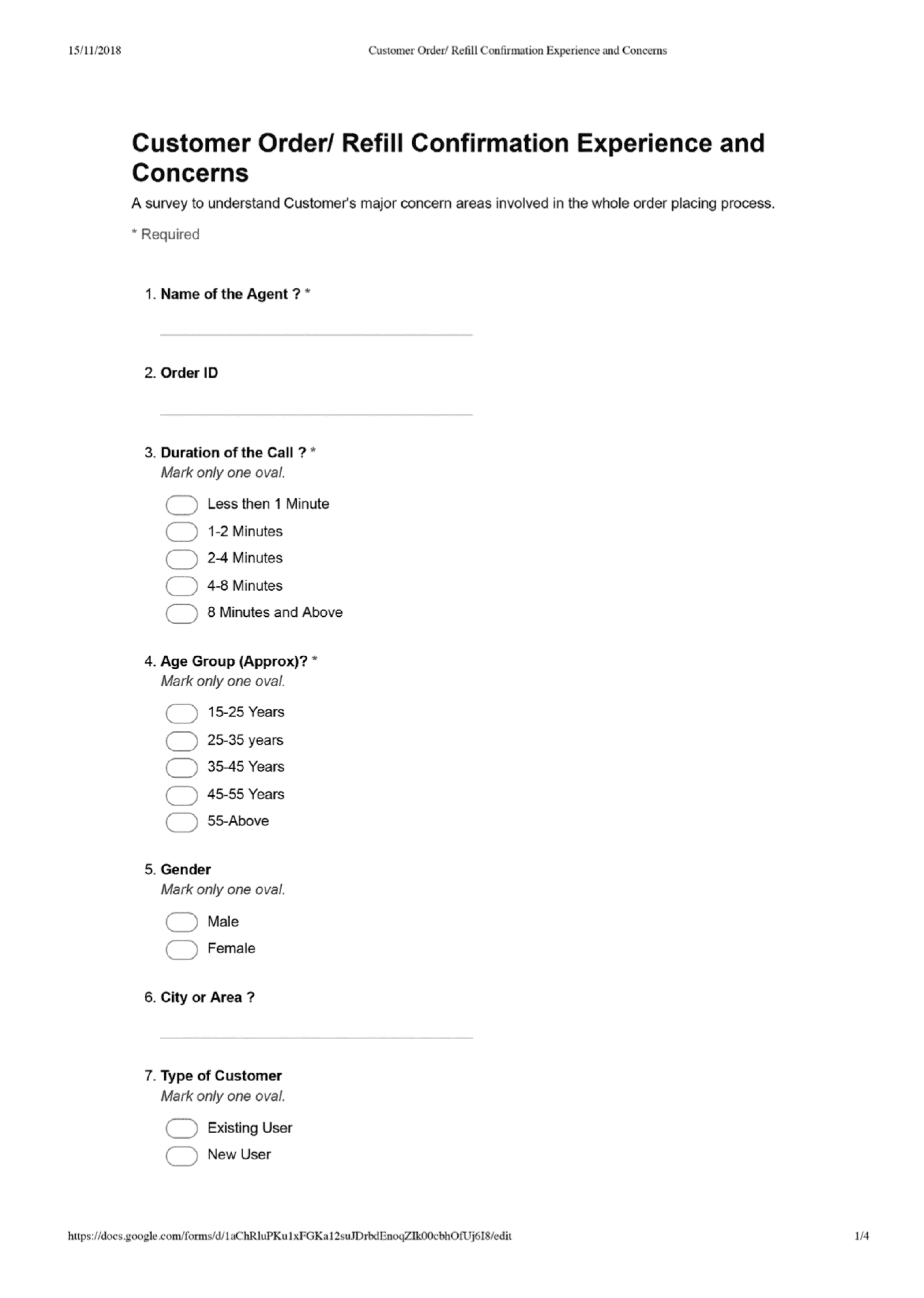
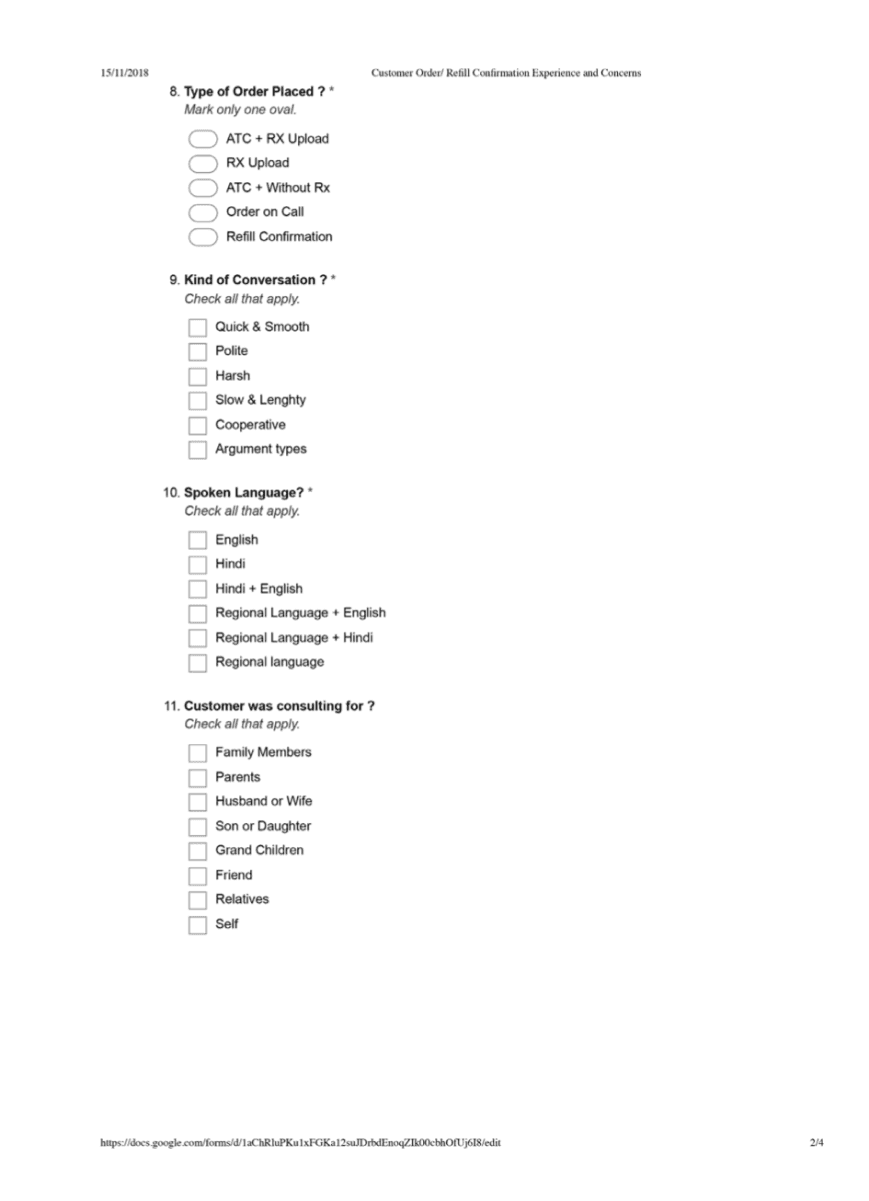
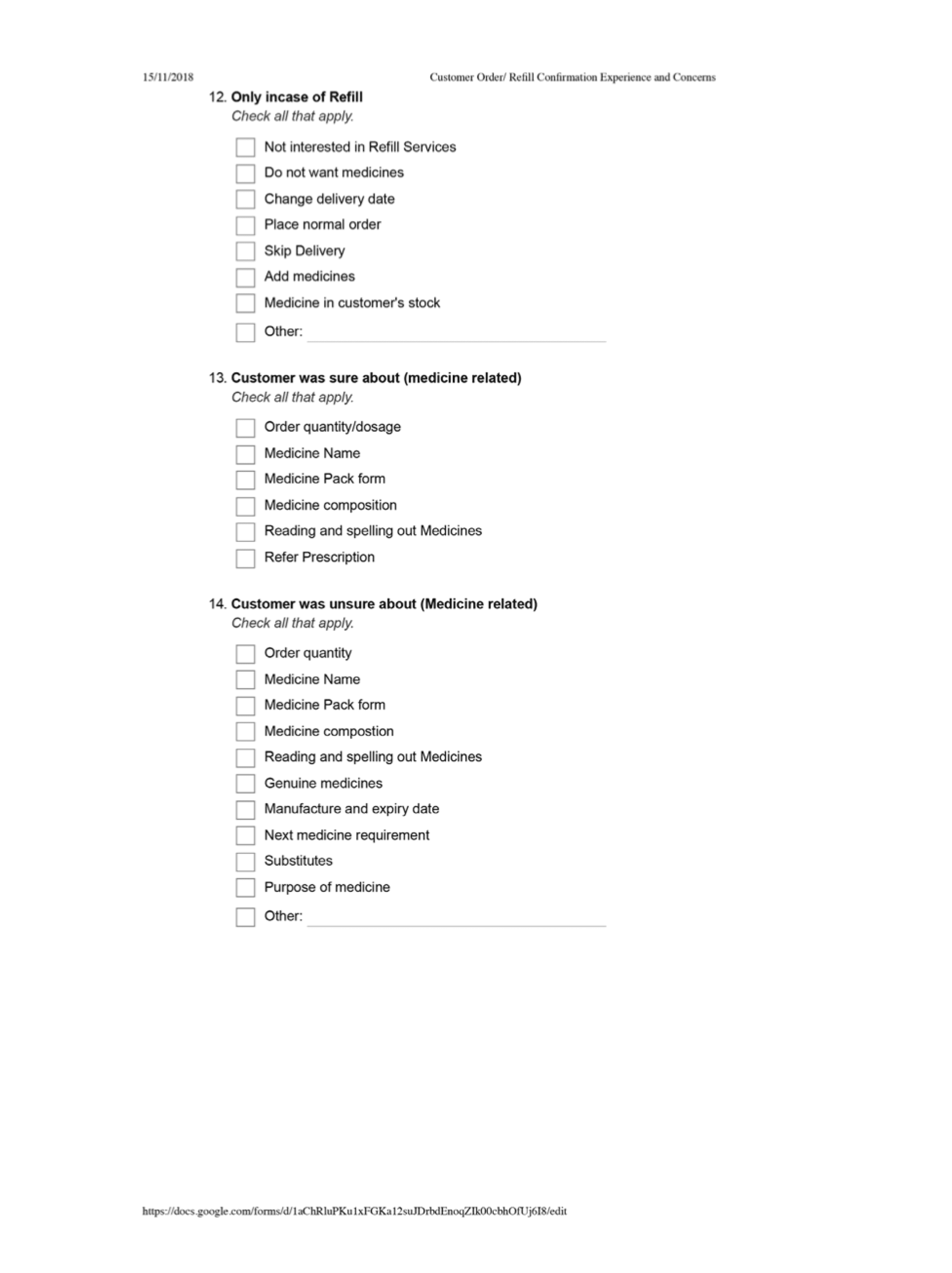
Survey Questions given to the participants
Males
Majority of our customers
~90%
Customer support calls are from existing customers.
Hindi
More than 70% of our customers speak
Field Research
After having a rough idea of the target audience (gender, type of customer), I figured we must start with doing qualitative research. I broke down the research in three Phases:Find out the user segment who is calling the most.
Phase 1 - One to One long in depth User Interviews
Phase 2 - Interviews with Acute and Chronic Patients
Contextual enquiry - existing App users
One long in depth User Interviews
Phase 1
General Questions for Context Building
Overview, Sense of Care, Relationship Factors
Self Medication and in house medicine bank
Visiting a Doctor, Diagnosis, Finding and selecting labs
Prescriptions and Tests, Collecting Reports, Support, Strength and Share
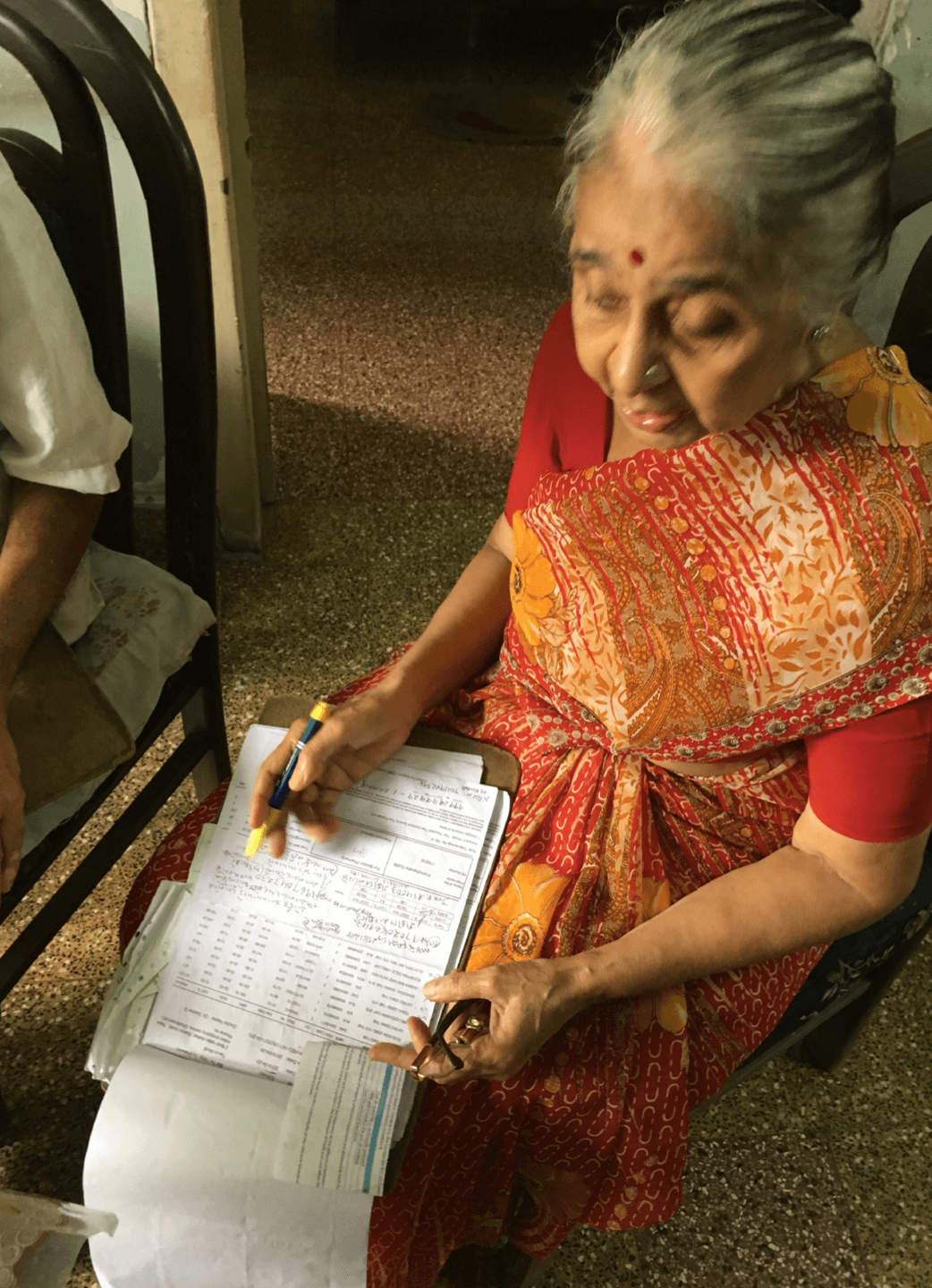
Name: TM and RM
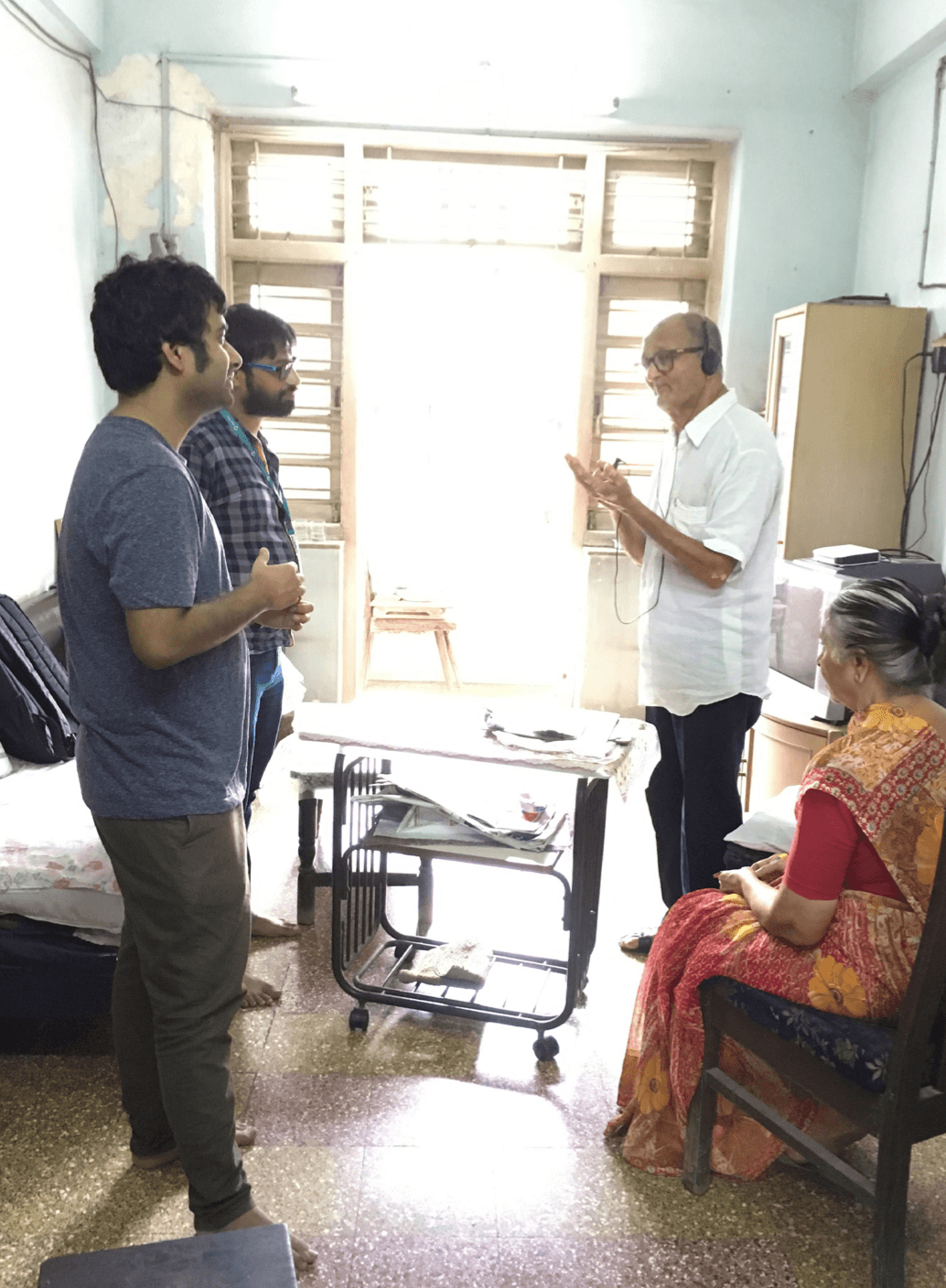
Age: 75 and 62, Profession: retired and housewife
First phase of interviews were conducted with 6 participants and the group was diverse in terms of gender, culture, economic distribution and health requirements.
Key Findings on Prescriptions
People store Rx and test reports for elderly patients cautiously.
Records and prescriptions are a one person responsibility in a household.
For People, Rx is just permission to get medicines.
People wait until the symptoms become intolerable.
Paternalistic models followed for serious conditions.
Key Findings on Medicines
Not taking a medicine is a sense of pride. (Middle aged/eldery). Taking medicines is inferior.
Allopathy medicines is an after choice.
People always look for preventive measures to avoid allopathy medicines.
People feel taking medications from an early age make their immunity weak.
Key Findings on Doctors
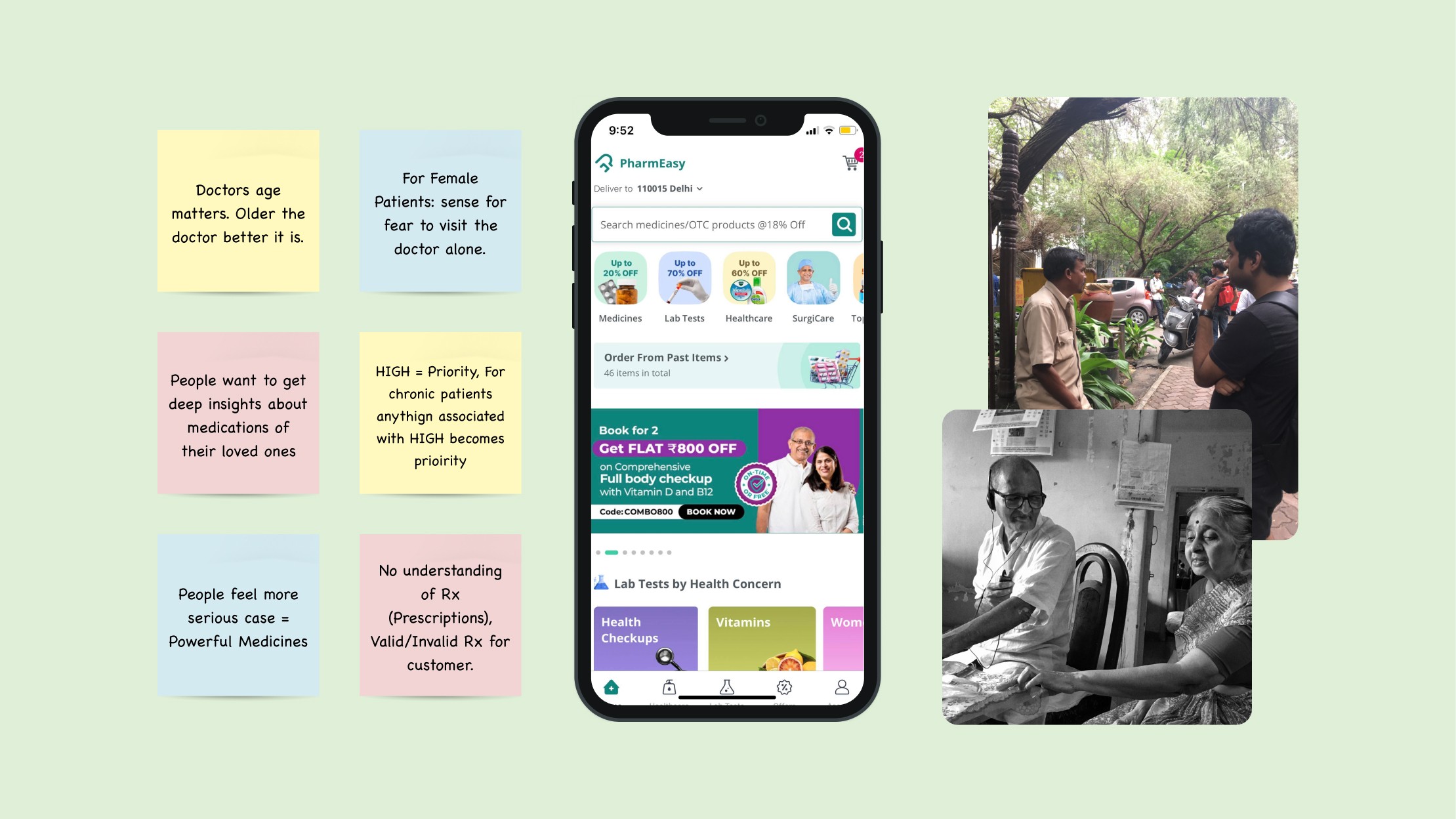
For Female Patients: sense for fear to visit the doctor alone.
People ask more queries regarding their medicines when its their family doctor.
Doctors age matters. Older the doctor better it is.
In generic illness cases, people feel consulting a doctor is a waste of money.
Interviews with Acute and Chronic Patients
Phase 2
General Questions for Context Building
Perception about Health
Measuring Illness - Acute and Generic
Treatement and Medicination
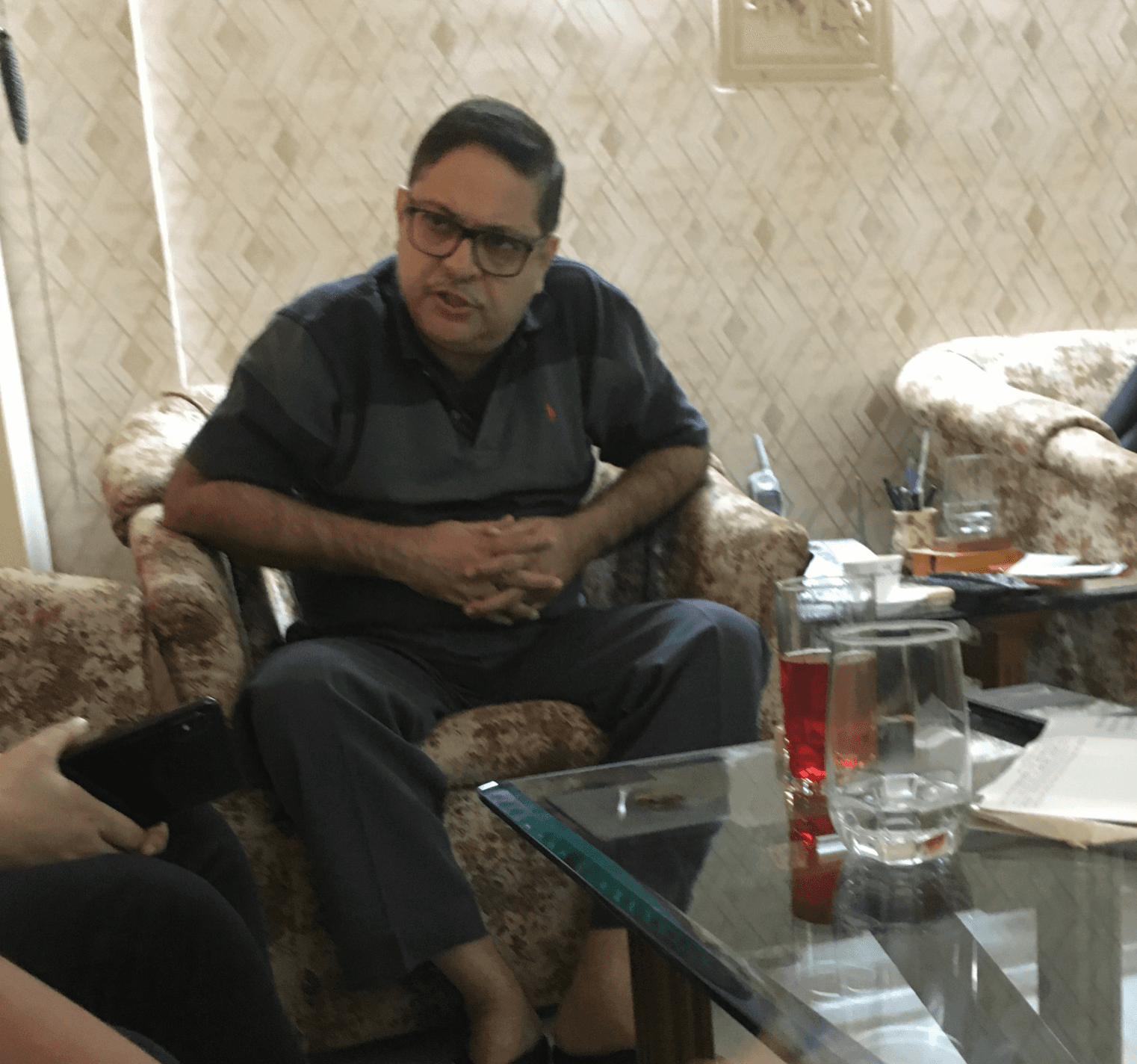
Name: MP, Age: 47, Symptoms: Diabetic
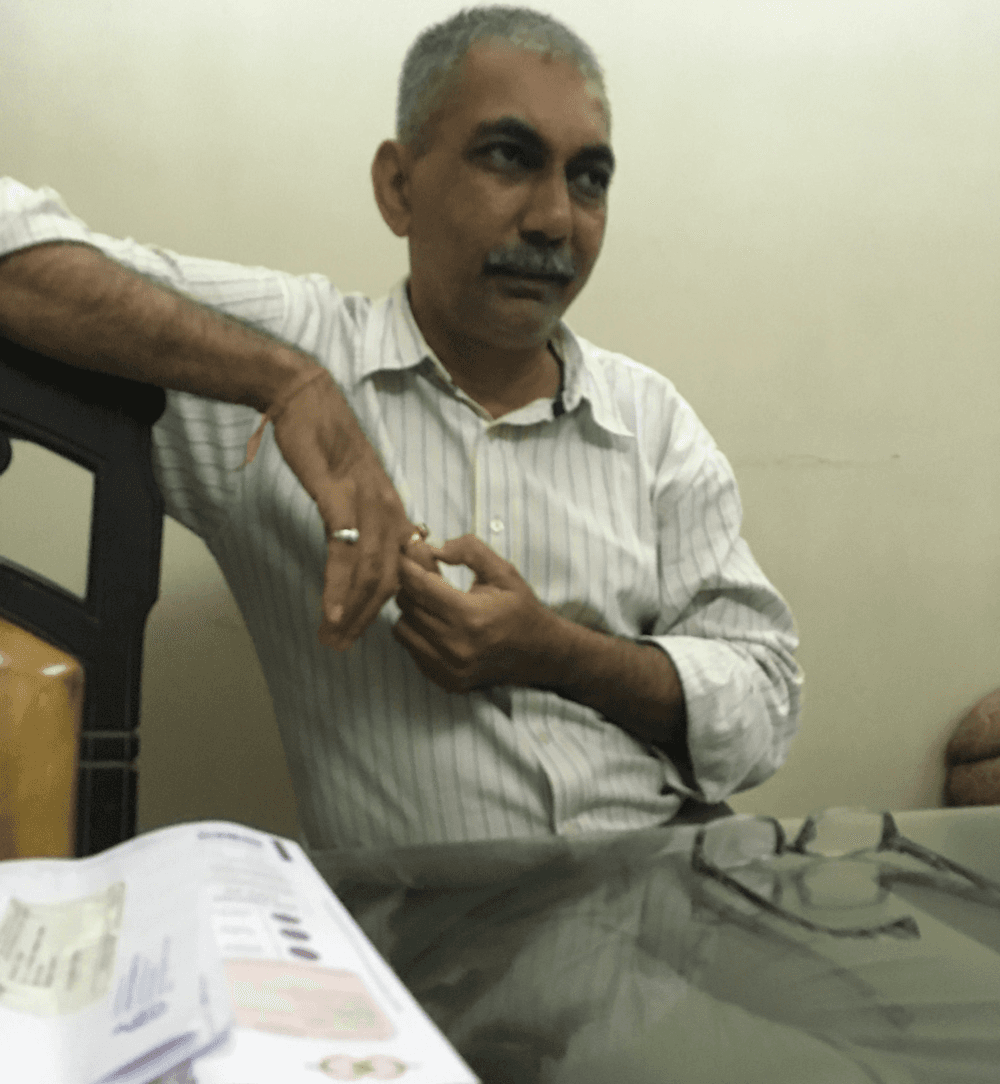
Name: VD, Age: 52, Profession: Small Business
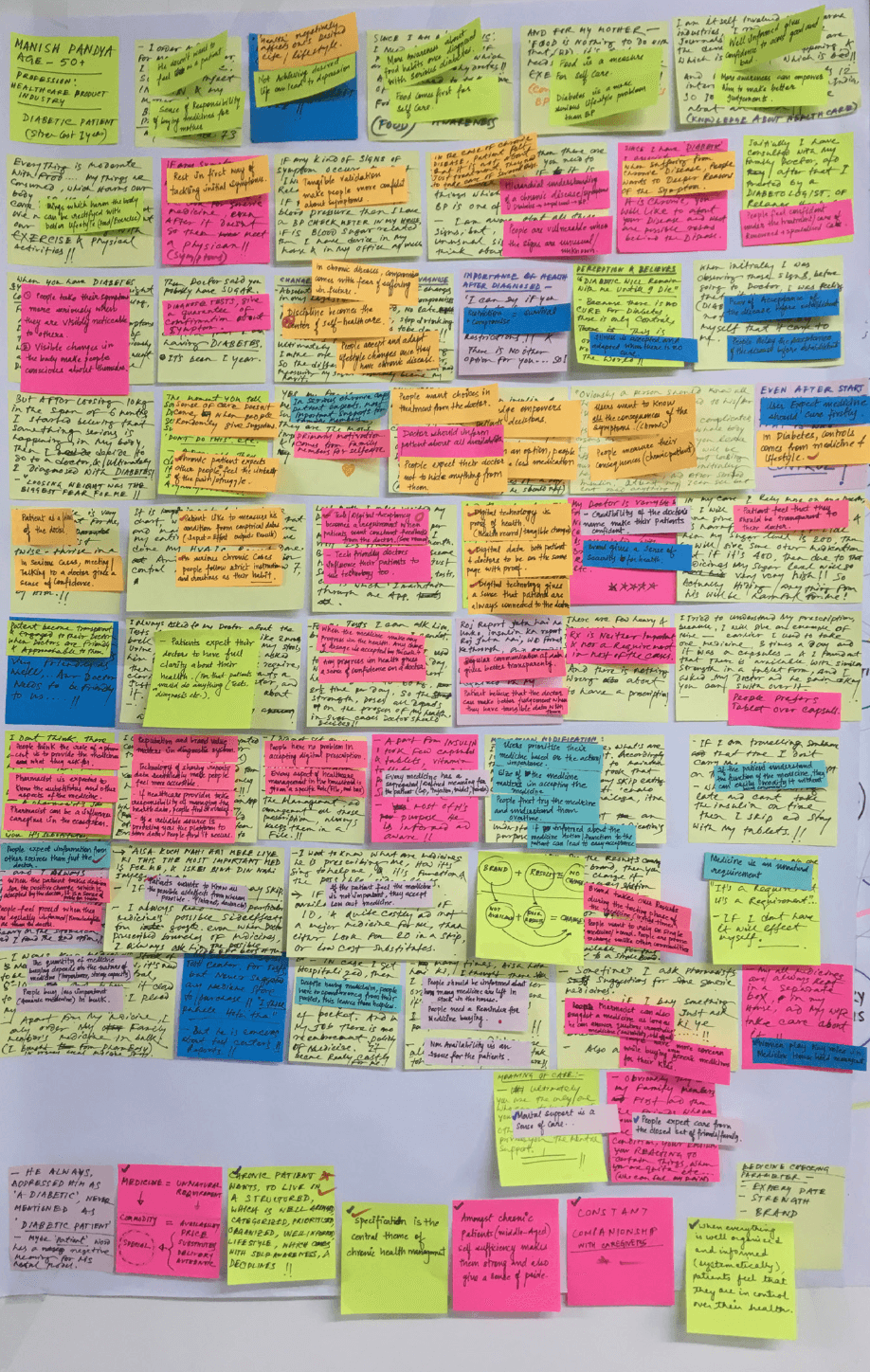
Findings from MP Interview
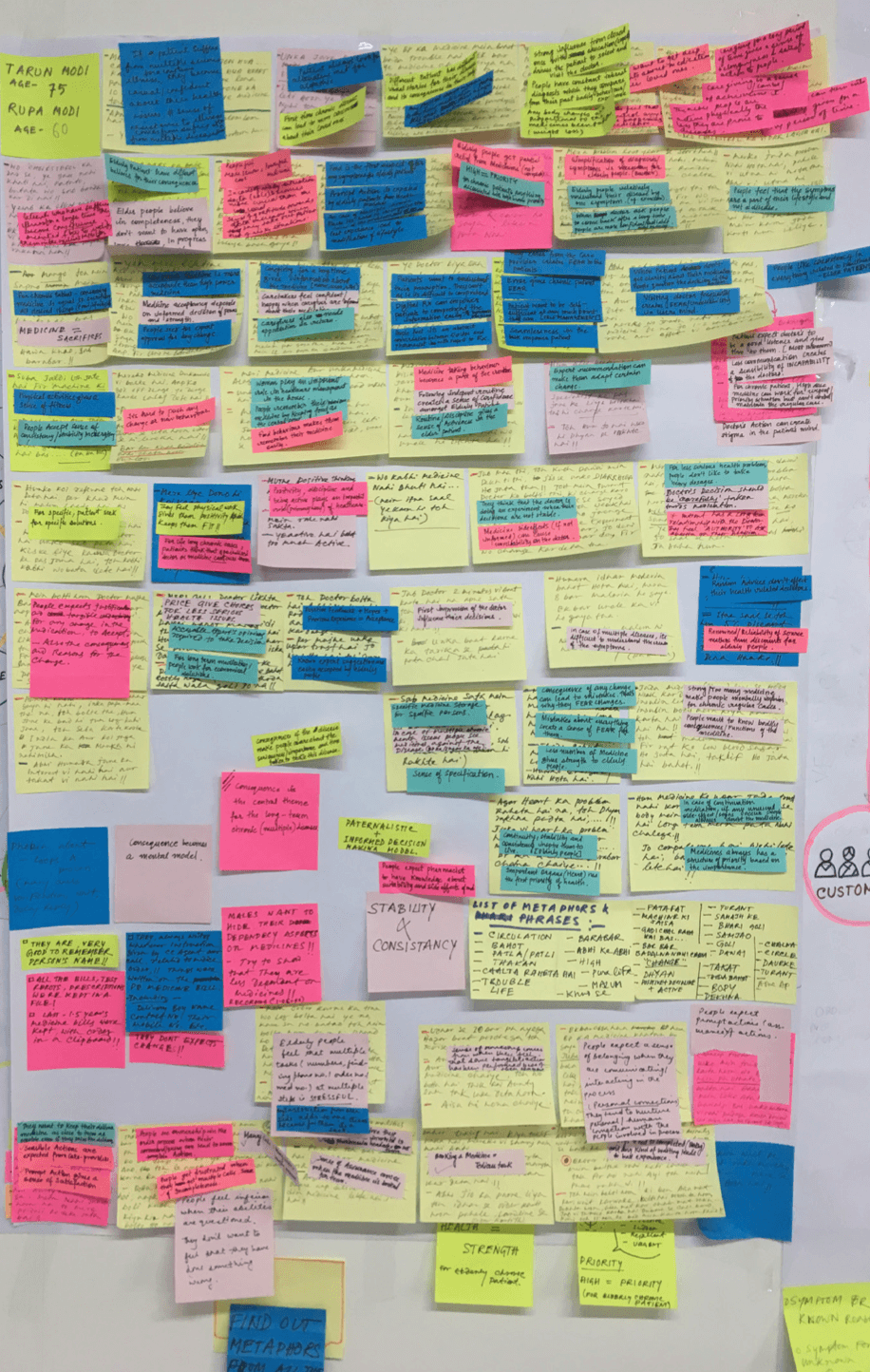
Findings from TM Interview
Results of Phase 2 User Interviews
People want to get deep insights about medications of their loved ones.
People see ownership in the order process when their command/query can lead to some tangible action.
People feel more serious case = Powerful Medicines
HIGH = Priority, For chronic patients anything associated with HIGH becomes priority
Digital Rx empowers patients to comprehend the information easily.
Issues in the system
Based on Contextual Inquiry:
No understanding of Rx (Prescriptions), Valid/Invalid Rx for customer.
Customer doesnot know which medicine need Rx and which does not.
Doctor On Call Program does not work for NCD (Non communicable diseases) patients
Information about payment is completely missing “PAYTM + 20% Discount”
Elderly people dont have clarity which number to call. They dont understand IVR
Same person has registered multiple mobile numbers.
Doctors speak for very less time in order to do more calls which creates more trust issues in people
Customer unable to differentiate between CC Agent and Doctor
Elderly people expect that whenever they call CC same person should answer. 💚
Persona:
We crafted personas based on our research to humanize our target audience, providing a tangible representation of their needs, preferences, and challenges. This strategic approach fosters a deeper understanding, guiding the development process to create more user-centric and impactful solutions.
Nirmal Desai
“With technology, everything is changing”
About:
Nirmal Desai is a 63 year old man who lives with his family - his mother (84 years old), his wife (60 years old) and one son and daughter in law. His sim and daughter in law are working. Hence it’s always his mom and wife who stays with him at home.
n the evening he goes to District park to meet his friends. He has a smartphone, he uses apps like. WhatsApp and he has an account on Facebook however never uses it.
Needs:
Mr. Nirmal has to get medicines on a regular basis, for his mother, wife and himself. It would be great if he can get some good discounts alone cause they have to spend quite a sum of money every month on medicines. He often go for diagnostic tests too. He would like to order medicines on his own every time they need them.

Age: 64
Location: Thane, Maharashtra
Status: Married
Job: Retired
Frustrations:
Mr. Nirmal has been independent all his life. Now because of his health and old age, he has to seek help from his son/daughter in law. He does not want to burden them. Don’t want to bug his son everytime he runs out of medicine.
The local pharmacist does not give any discounts to him.
Issue: No understanding of Rx, Valid / Invalid Rx for customer
Solution
An interface which can increase the visibility of doctor consultations and Prescriptions as many users are not aware of the same and they end up getting confused and taking multiple doctor consultations.
Nirmal, a 60-year-old using a prescription app, struggles to differentiate valid and expired prescriptions. The app lacks clarity on prescription status, has a complex interface, and lacks reminders.
Nirmal faces difficulty communicating with healthcare providers. Solutions include a clear status indicator, user-friendly interface, medication reminders, improved communication features, and educational resources. Addressing these issues can enhance Nirmal's understanding and adherence to her prescriptions.
Research Building Blocks
This change will be effected on the Accounts page where in now we will have a separate entry point as “Prescriptions” which will land the user to the patients list.
Clicking on a patient name will lead user to the all prescriptions under that patient name.
That will have 2 tabs - Uploaded by you and Doctor consultations.
These two tabs will have two sections - Valid and Invalid Prescriptions.
Filter by time is the best thing which will definitely enable the user to sort the data asap.
Impact / Objectives
Consult Boost
Increase in the visibility of Doctor Consultation services.
Clarity
On which prescriptions are Valid and which ones are invalid.
History
Users will be able to see all his/her past prescriptions in the app and this will reduce the redundant doctor consultations as well.
Information Architecture
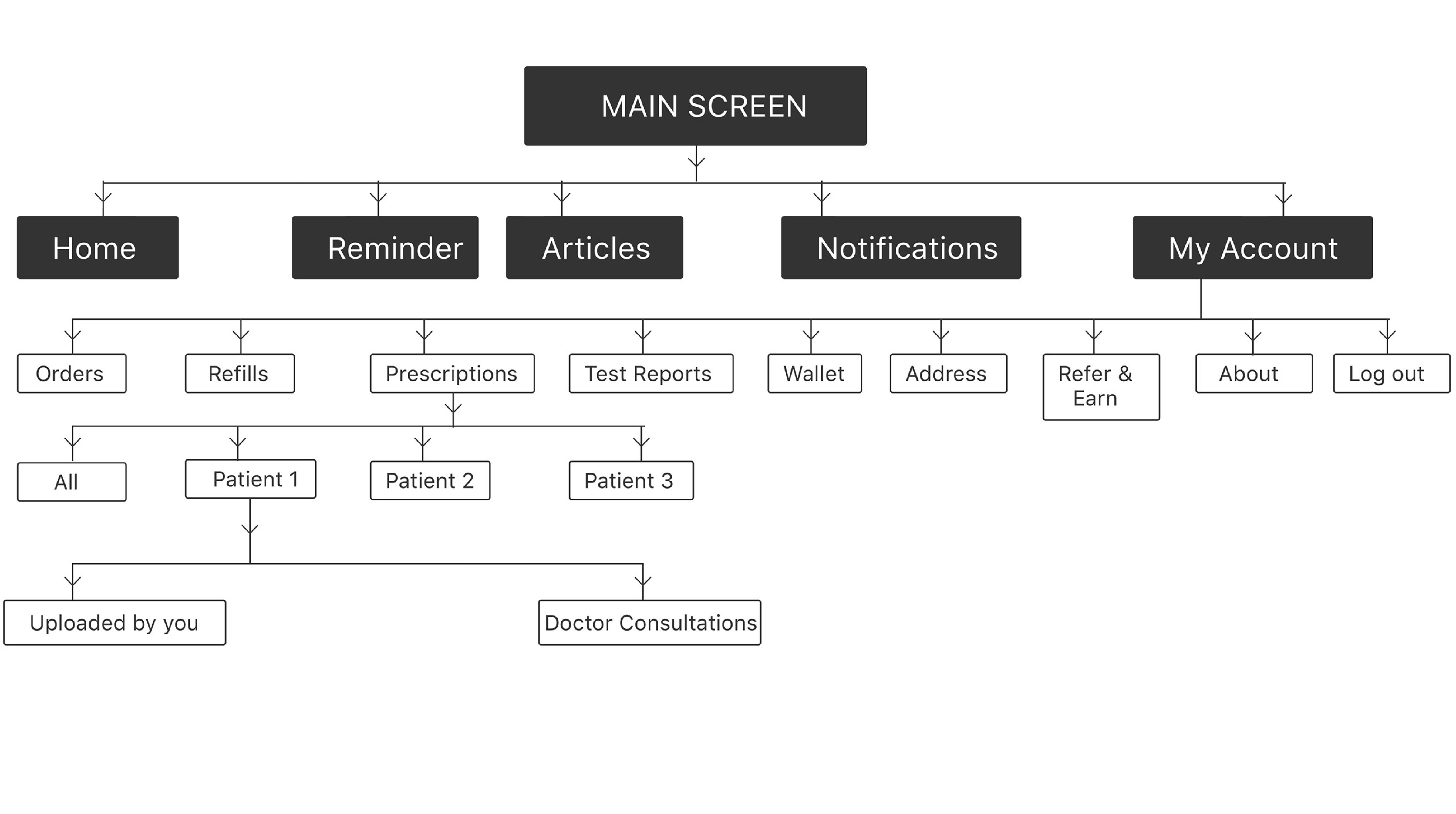
The revamped Information Architecture
Wireframes
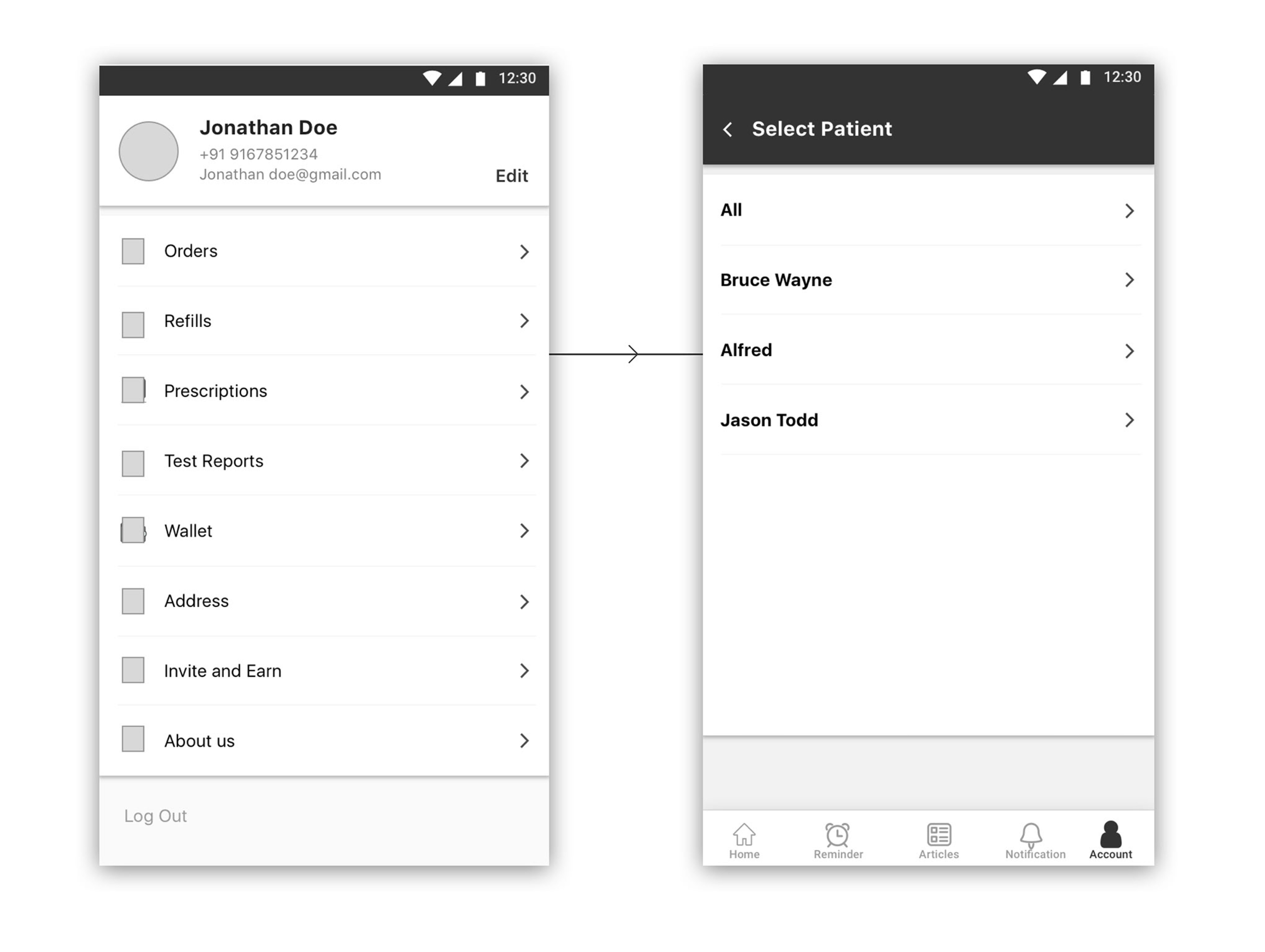
Profile Page and Select patient page in the PharmEasy Consumer App
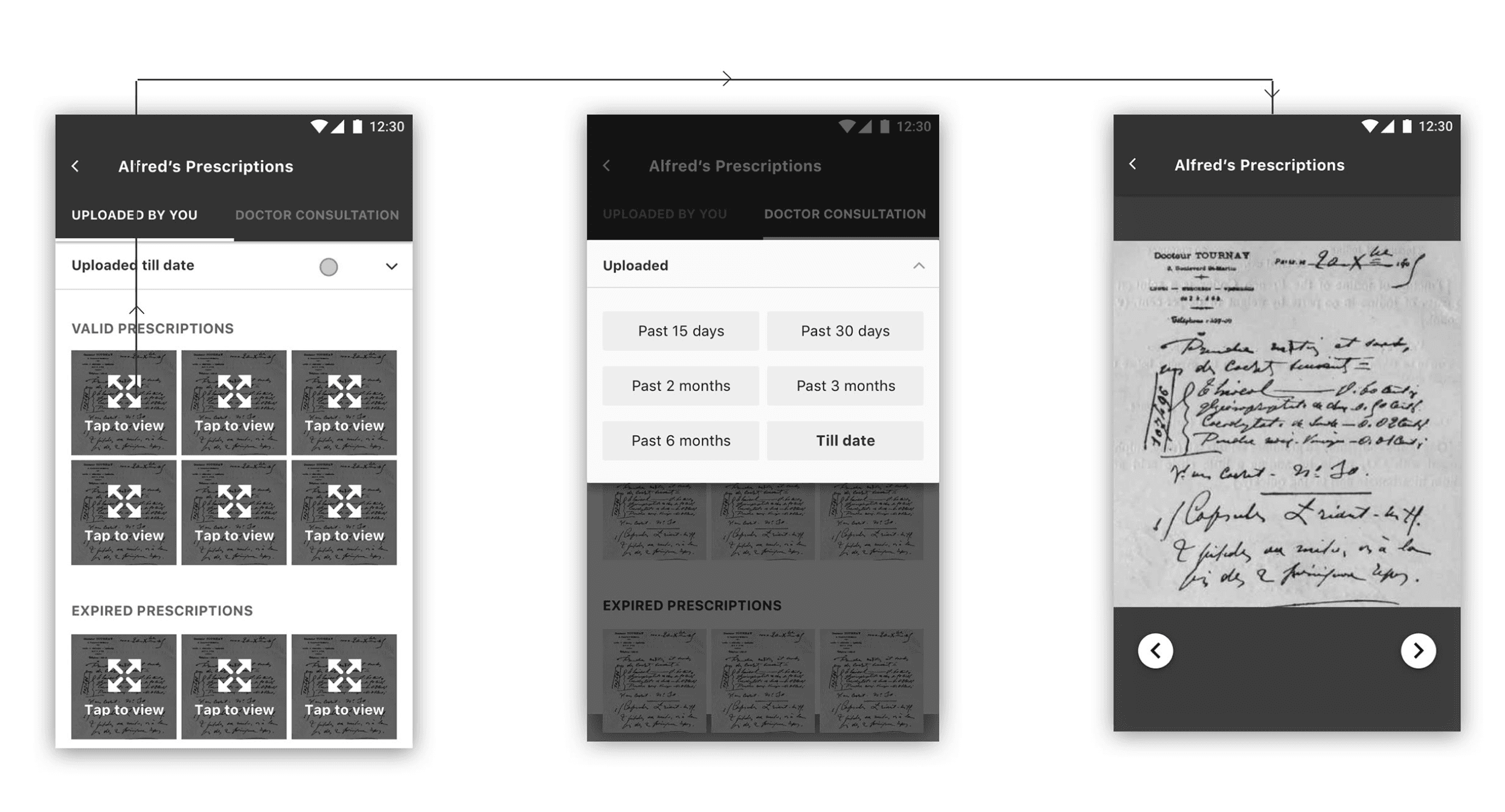
Prescription Page with two functionalities - Separate tabs for Uploaded by You prescription and Doctor Consultation prescription tab. Second feature is time range drop down.
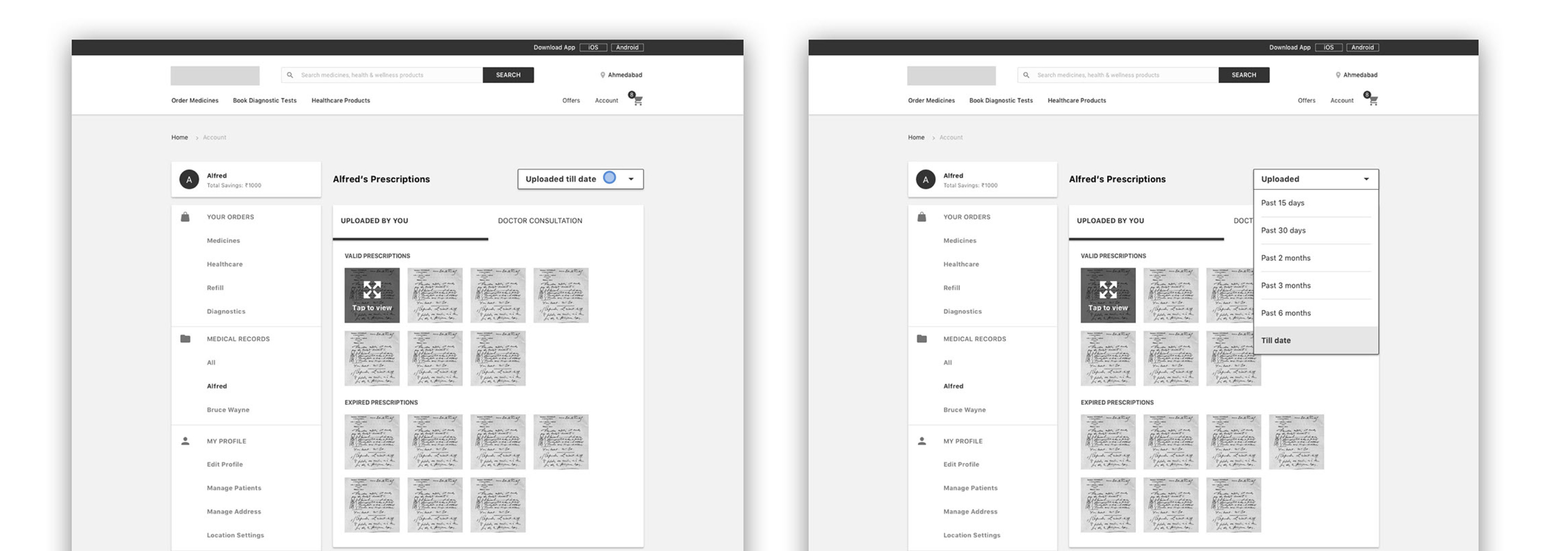
Prescription Page with two functionalities - Separate tabs for Uploaded by You prescription and Doctor Consultation prescription tab. Second feature is time range drop down.
Impact
Increase in the visibility of Doctor Consultation services.
Defining PharmEasy User Persona: After defining persona, we used this amazing book to further understand how we might design a solution that can cater to the Older Adults who are our majority users.
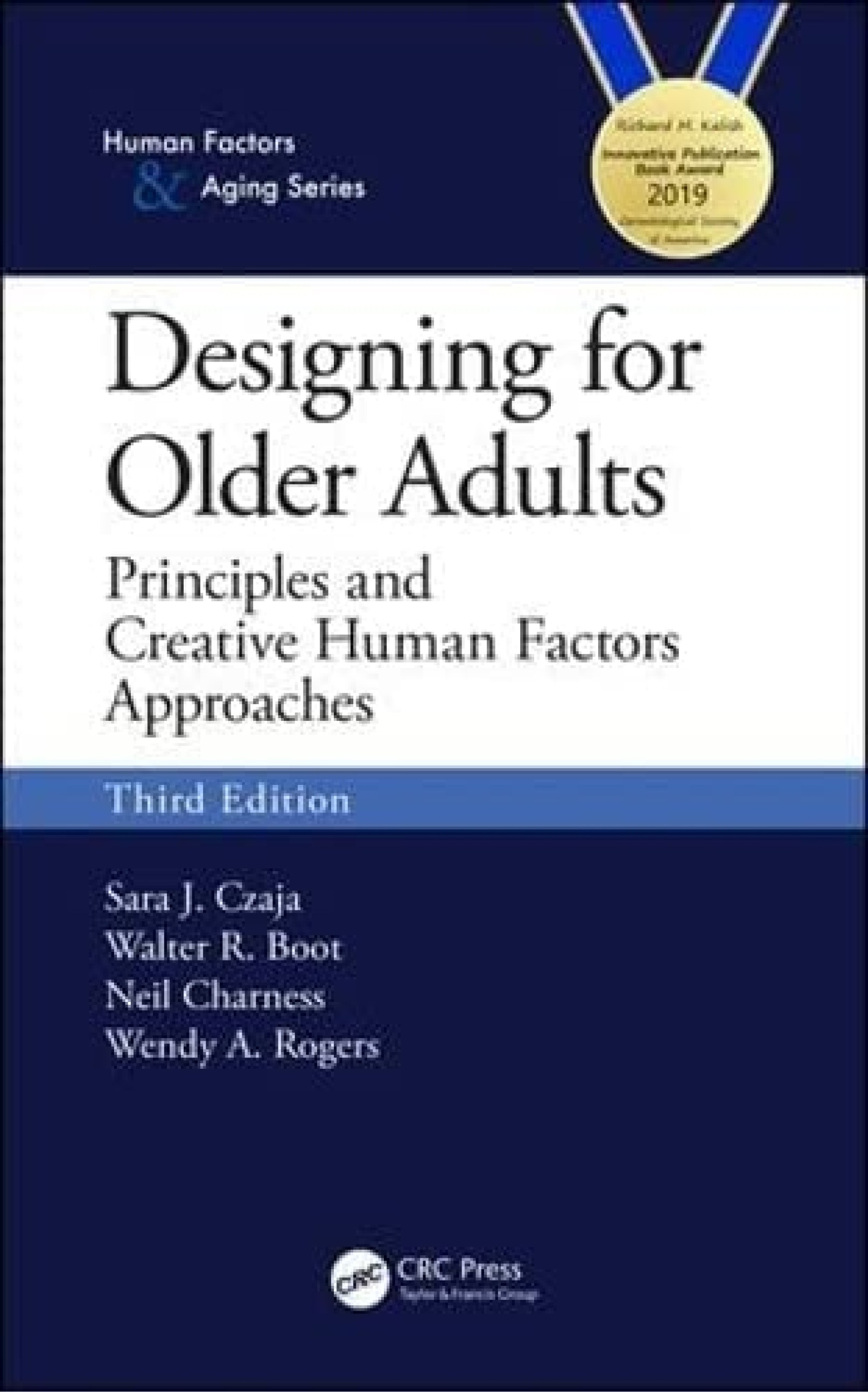
Book to refer for our future designs
Summary
Here is the short summary of the entire project
01
Question
How might we reduce customer support calls and enhance overall ux of the app?
Role
UX Researcher
Stakeholders: Design Team, PM, Business Team02
Method
Surveys
Field Research
Contextual Inquiry03
Outcome
Discovering issues in the app
Validating Persona04
Impact
05
Making the app ux better
Defining user segment, reference material (book) for guiding any further design guidelines.